| OCR Text |
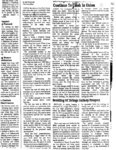
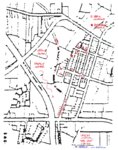
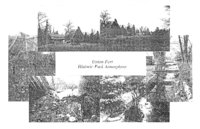
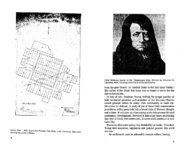
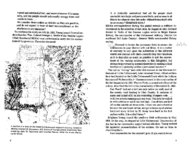
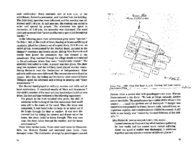
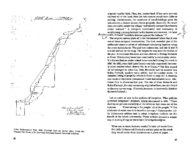
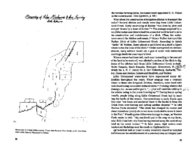
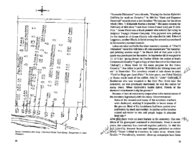
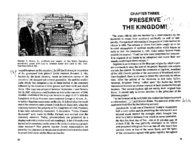
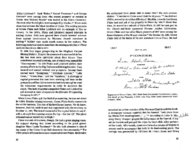
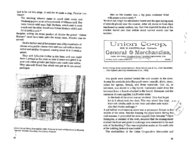
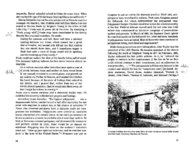
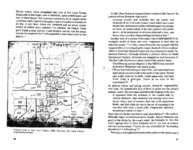
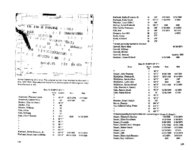
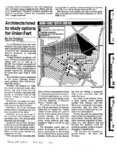
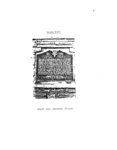
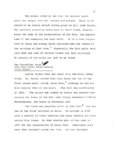
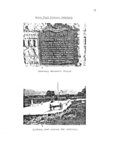
Show a good and substantial fort, and more whenever it is necessary, and the people should universally occupy them and . reside in them. . . . We consider these orders as definite as they are positi~e, and do not expect to hear of their noncompliance or disobedience in any instance.' To reinforce his word, 'on July 25,1853, Young issued Gene~al Orders Number Two. Colonel George A. Smith of the Nauvoo Legion <Utah Territorial Militia) was authorized to carry out the instructions of the governor. The order declared: . .·;~.(~;~t{l·••. t' . : . ~ . . '.~: .'. . \' I A section of a map of the Great Salt Lake and adjacent country Issued In 1852 by Howard W. Stansbury, U.S. Corps of Topographical Engl~eers. Map drawn by John W. Gunnison and Charles Pr~uss. Note the name Wa.ko. ne·kln Creek. . 6 It is distinctly understood that all the people shall assemble into large and permanent forts, and no man is at liberty to refuse to obey this order without being dealt with as an enemy.' (Emphasis mine.) Militia correspondence during this period reveals a military involvement in the selection of fort sites. In August of 1853, General Daniel H. Wells of the Nauvoo Legion wrote to Major Easton Kelsey, the commander of the Cottonwood Military District (in southeast Salt Lake County). General Wells commanded Kelsey saying: C~~P.roceed to locate the~ecessary forts to secure the settlements in your district with out delay. It is a matter of courtesy to call upon the authorities of the different wards and counsel with them concer[nJing their locations as it is desirable as much as possible to suit the convenience of the various settlements in this [illegible], but always be governed by a sound discretion in making a final location as it probably will be a permanent location.'o The call to 'Ifort-up" met with little success in the Mormon settlement of Little Cottonwood; later renamed Union. (Most settlers here had located on the Little Cottonwood Creek which the Indians had named Wa-ko-ne-kin.)II Commencement in the construction of the fort began late in 1853. Warren Foote, a prominent citizen of the colony, described the fort in his journal entry of December 31,1853: Our Wardu laid out a fort one mile below our mill, east of the county road leading to Utah County. It contains 10 acres and is laid of[f] in lots containing 18 square ~ . .. with two streets numing east and west. This is to be walled in with adobies or earth ten feet high. Corralllots are laid off on the outside on three sides. I took one and a fraction lot near the northeast corner, and got a house up of adobas [sic] one story 16 feet by ~. Many have built in the fort and moved in. It is called Union.13 Brigham Young toured the southern Utah settlements in May 1854. On his way, he stopped at Little Cottonwood. Construction of the fort in the community lagged behind schedule. Young noticed the apparent procrastination of the settlers. He lost no time in chastising them: I am responsible for the counsel I give. If you want to know ' d-e. \f -! c. 7 |