| Title |
Mr. Robert Cuellar, Los Angeles, California: an interview by Greg Coronado, December 27, 1972; Mr. Robert Cuellar, Westchester, California: an interview by Greg Coronado, December 26, 1972 |
| Alternative Title |
Spanish speaking peoples in Utah, oral histories: number 62 and 63; or, Utah Minorities number S-62 and S-63 |
| Creator |
Cuellar, Robert |
| Contributor |
University of Utah. American West Center; Coronado, Greg, 1946-2012 |
| Publisher |
Digitized by J. Willard Marriott Library, University of Utah |
| Date |
1972-12-26; 1972-12-27 |
| Date Digital |
2015-01-15 |
| Spatial Coverage |
Los Angeles. Los Angeles County, California, United States, http://sws.geonames.org/5368361/ |
| Subject |
Mexican Americans--California--History; Mexican Americans--California--Biography; Mexican Americans--California--Social conditions; Chicano movement--California |
| Keywords |
Chicano; PASSO; LULAC; MEChA; EYOA; Raza Unida; American G.I. Forum; Jobs for Progress, Inc.; Operation SER |
| Description |
Transcript of two interviews held December 26 - 27, 1972, by Greg Coronado with Robert Cuellar of Los Angeles, California, deputy director for planning, evaluation and management information systems with Jobs for Progress, Inc. |
| Type |
Text |
| Genre |
oral histories (literary works) |
| Format |
application/pdf |
| Language |
eng |
| Rights |
 |
| Relation |
For description of each interview, see: http://nwda.orbiscascade.org/ark:/80444/xv23580 |
| Scanning Technician |
Matt Wilkinson |
| Conversion Specifications |
Original scanned with Kirtas 2400 and saved as 400 ppi uncompressed TIFF. PDF generated by Adobe Acrobat Pro 10 for CONTENTdm display |
| ARK |
ark:/87278/s61z5v2m |
| Topic |
Mexican Americans--Biography; Mexican Americans--Social conditions; Chicano movement |
| Setname |
uum_sspu |
| ID |
1040062 |
| Reference URL |
https://collections.lib.utah.edu/ark:/87278/s61z5v2m |
| Title |
Page 60 |
| Format |
application/pdf |
| Setname |
uum_sspu |
| ID |
1040052 |
| OCR Text |
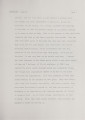
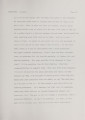
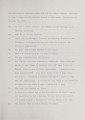
Show -. IlTERVIEW: Cuellar ' Page 25 before, the criteria was probably where the largest population concentrated. The other ones that were opened up, well it de reloped that way for two or three years. There were the ten that we opened up in '71. We developed somewhat of a criteria for the selection of those cities by the way providing assistance, accepted by the national board of directors and accepted by the Department of Labor. But the criteria included population density, it included the needs of the people there. In other words, the unemployment rates, the poverty status of the people, tne number of family below certain income level. Also very importantly, the chances for a manpower program to succeed, that is, how many resources for employment are there. If there's no employment availability there, it is very difficult to make a manpow€r program successful. So those factors are included in the criteria and it was the first time that we actually selected cities for expansion on those basis. There are other factors that I think, that are, that carry less of an influence but are nevertheless important: organiza tional strength. If a community is not organized it is very difficult to get a city there because they usually don't want it anyway, then they throw you out. But a well organized, you can bet that they are going to do everything in their power to make it succeed so that's one of the factors. GC I am beginning to get a little bit confused. You speak of the |
| Reference URL |
https://collections.lib.utah.edu/ark:/87278/s61z5v2m/1040052 |