| Title |
Mr. Robert Cuellar, Los Angeles, California: an interview by Greg Coronado, December 27, 1972; Mr. Robert Cuellar, Westchester, California: an interview by Greg Coronado, December 26, 1972 |
| Alternative Title |
Spanish speaking peoples in Utah, oral histories: number 62 and 63; or, Utah Minorities number S-62 and S-63 |
| Creator |
Cuellar, Robert |
| Contributor |
University of Utah. American West Center; Coronado, Greg, 1946-2012 |
| Publisher |
Digitized by J. Willard Marriott Library, University of Utah |
| Date |
1972-12-26; 1972-12-27 |
| Date Digital |
2015-01-15 |
| Spatial Coverage |
Los Angeles. Los Angeles County, California, United States, http://sws.geonames.org/5368361/ |
| Subject |
Mexican Americans--California--History; Mexican Americans--California--Biography; Mexican Americans--California--Social conditions; Chicano movement--California |
| Keywords |
Chicano; PASSO; LULAC; MEChA; EYOA; Raza Unida; American G.I. Forum; Jobs for Progress, Inc.; Operation SER |
| Description |
Transcript of two interviews held December 26 - 27, 1972, by Greg Coronado with Robert Cuellar of Los Angeles, California, deputy director for planning, evaluation and management information systems with Jobs for Progress, Inc. |
| Type |
Text |
| Genre |
oral histories (literary works) |
| Format |
application/pdf |
| Language |
eng |
| Rights |
 |
| Relation |
For description of each interview, see: http://nwda.orbiscascade.org/ark:/80444/xv23580 |
| Scanning Technician |
Matt Wilkinson |
| Conversion Specifications |
Original scanned with Kirtas 2400 and saved as 400 ppi uncompressed TIFF. PDF generated by Adobe Acrobat Pro 10 for CONTENTdm display |
| ARK |
ark:/87278/s61z5v2m |
| Topic |
Mexican Americans--Biography; Mexican Americans--Social conditions; Chicano movement |
| Setname |
uum_sspu |
| ID |
1040062 |
| Reference URL |
https://collections.lib.utah.edu/ark:/87278/s61z5v2m |
| Title |
Page 5 |
| Format |
application/pdf |
| Setname |
uum_sspu |
| ID |
1039997 |
| OCR Text |
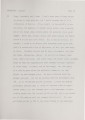
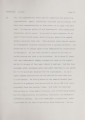
Show INTERVIE\.J: Cuellar Page 3 GC: tas there or how active were you involved? Was it just on the state level? You seemed to have been able to analyze the weakness of the organization, was there any particular strength to · it? RC: There was a lot of strength to it. Primarily I think because of the idea. The idea of the organization to at least, to a certain extent, to involve the youth. It was an obvious effort by most of the membership of the organization and it still is. I think it has strengthened quite a bit, to develop leadership out of the younger generation. Again there were inherent problems, but there always are in terms of developing a large group. But out of that group also carne many, many persons who are today involved in the organization quite extensively, in other organizations. They have experienced a tremendous personal development in experience, in sophistication, that is way beyond the expectations of many ten years ago. So there was a lot of involvement on the national basis, particularly with the election of John F. Kennedy to the presidency. I think in west Texas, I could remember the youth leading the campaign for this individual to the presidency more so than even the adults. I can remember in PASSO, forming PASSu, also the youth taking a very serious approach to it to the point that we developed a very good system of inducing people to vote, something that was unheard of before, so it's civic development. Nationally I think the same thing developed in other areas and |
| Reference URL |
https://collections.lib.utah.edu/ark:/87278/s61z5v2m/1039997 |