| Title |
Mr. Robert Cuellar, Los Angeles, California: an interview by Greg Coronado, December 27, 1972; Mr. Robert Cuellar, Westchester, California: an interview by Greg Coronado, December 26, 1972 |
| Alternative Title |
Spanish speaking peoples in Utah, oral histories: number 62 and 63; or, Utah Minorities number S-62 and S-63 |
| Creator |
Cuellar, Robert |
| Contributor |
University of Utah. American West Center; Coronado, Greg, 1946-2012 |
| Publisher |
Digitized by J. Willard Marriott Library, University of Utah |
| Date |
1972-12-26; 1972-12-27 |
| Date Digital |
2015-01-15 |
| Spatial Coverage |
Los Angeles. Los Angeles County, California, United States, http://sws.geonames.org/5368361/ |
| Subject |
Mexican Americans--California--History; Mexican Americans--California--Biography; Mexican Americans--California--Social conditions; Chicano movement--California |
| Keywords |
Chicano; PASSO; LULAC; MEChA; EYOA; Raza Unida; American G.I. Forum; Jobs for Progress, Inc.; Operation SER |
| Description |
Transcript of two interviews held December 26 - 27, 1972, by Greg Coronado with Robert Cuellar of Los Angeles, California, deputy director for planning, evaluation and management information systems with Jobs for Progress, Inc. |
| Type |
Text |
| Genre |
oral histories (literary works) |
| Format |
application/pdf |
| Language |
eng |
| Rights |
 |
| Relation |
For description of each interview, see: http://nwda.orbiscascade.org/ark:/80444/xv23580 |
| Scanning Technician |
Matt Wilkinson |
| Conversion Specifications |
Original scanned with Kirtas 2400 and saved as 400 ppi uncompressed TIFF. PDF generated by Adobe Acrobat Pro 10 for CONTENTdm display |
| ARK |
ark:/87278/s61z5v2m |
| Topic |
Mexican Americans--Biography; Mexican Americans--Social conditions; Chicano movement |
| Setname |
uum_sspu |
| ID |
1040062 |
| Reference URL |
https://collections.lib.utah.edu/ark:/87278/s61z5v2m |
| Title |
Page 28 |
| Format |
application/pdf |
| Setname |
uum_sspu |
| ID |
1040020 |
| OCR Text |
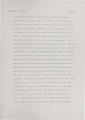
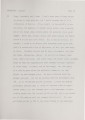
Show I TERVIEW: Cuellar Page 26 in the area of leadership that he would never have had the opportunity to do so. So you have a sort of a core of people that are gone that route. Some of them have fallen off on the wa ·side because of the inability or the incapacity to learn, so they have fallen off the way side, but there are many, many young people who have come up and all of a sudden, instead of going through like it used to be, anybody that got a degree either went to teach or some other area, pretty hard to find a job. Where now they're finding challenging areas with good salaries that allows them the time to travel, it gives them the exposure that they all of a sudden they see other cities other than south Texas or their own home town, and it's exposure and it's awareness and it's the ability to pick up_ the phone and call somebody across the country and talk business . This used to be a scarey thing for everybody . ''Who, me, me call across the country? It's going to cost a lot of money and I don't have it." Those abilities, not saying the federal government is subsidizing the kicks of anybody in the Spanish-speaking, I don't think that's the case, I think that it's a matter of opening the door to many Mexican-Americans to practice some of the techniques, some of the middle-class procedures that were never handed down to them nor the opportunity to do, and that's happening now. |
| Reference URL |
https://collections.lib.utah.edu/ark:/87278/s61z5v2m/1040020 |