| OCR Text |
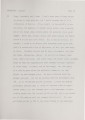
Show I TERVIEP: Cuellar Page 28 out of poverty and get out of what we call sometimes the "miorant 0 c~ cle." They find it more difficult, they find the doors a little bit more closed language-wise, communication-wise they have more problems because they don't practice it as much. Sp~nish is spoken at home totally, completely. They don't get out very easily. The other thing is that their skills are limited, they don't get the opportunity to learn these skills so it's really just farm work. So that's the difference, the awareness of any movement hits them late~ than in urban areas. And if any movement is happening in the city, heck, by the time it gets to the rural areas then it's already so developed that they aren't even aware of it. We worry _about the migrants, they don't even worry about themselves most of the time, because they don't know, they're not aware that they're poor. In the urban, it's different because there's poverty, in a way, a lot of ways I guess it's worse because they don't have the, at least the flexibility to be ignorant enough, not to know that they're missing a lot, like a kid on the farm. A kid on the farm goes to school and that's where he learns most of it and that's limited. The kid in the urban areas is very close to the other kid who is rich, who is middle-class. He is exposed to something better. He yearns for something better even though he can't get it because he's locked into a cycle of poverty with his parents· |