| Title |
Spanish speaking peoples in Utah, oral histories: book 13, numbers 135 through 146 |
| Alternative Title |
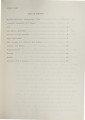
Cornelio Candelaria, Old San Acacio, Colorado: an interview by John R. Tapia, August 10, 1973; Duván Luján, Genaro Court, New Mexico: an interview by Greg Coronado, August 5, 1973; Duván Luján, Albuquerque, New Mexico: an interview by Greg Coronado, August 5, 1973; Dr. Hector P. Garcia, Corpus Christi, Texas: an interview by Greg Coronado [August 10, 1973]; Ben Romero Sr., Fort Garland, Colorado: an interview by John R. Tapia, August 13, 1973 [in Spanish and English]; Ben Romero Sr., Fort Garland, Colorado: an interview by John R. Tapia, August 14, 1973 [in Spanish and English] |
| Creator |
Candelaria, Cornelio; Luján, Duván, 1919- ; Garcia, Hector P., -1996.; Romero, Ben, 1882- |
| Contributor |
University of Utah. American West Center; Coronado, Greg, 1946-2012; Tapia, John Reyna |
| Publisher |
Digitized by J. Willard Marriott Library, University of Utah |
| Date |
1973-08-05; 1973-08-10; 1973-08-13; 1973-08-14 |
| Date Digital |
2015-01-15 |
| Spatial Coverage |
San Luis, Costilla County, Colorado, United States, http://sws.geonames.org/5437682/ ; San Acacio, Costilla County, Colorado, United States, http://sws.geonames.org/5437633/ ; Fort Garland, Costilla County, Colorado, United States, http://sws.geonames.org/5422141/ ; Corpus Christi, Nueces County, Texas, United States, http://sws.geonames.org/4683416/ ; Albuquerque, Bernalillo County, New Mexico, United States, http://sws.geonames.org/5454711/ ; Taos, Taos County, New Mexico, United States, http://sws.geonames.org/5493811/ |
| Subject |
Mexican Americans--Colorado--History; Mexican Americans--Colorado--Biography; Mexican Americans--Colorado--Social conditions; Mexican Americans--Texas--History; Mexican Americans--Texas--Biography; Mexican Americans--Texas--Social conditions; Chicano movement--Texas; Chicano movement--Colorado; Chicano movement--New Mexico |
| Keywords |
Discrimination; Great Depression; Ethnic relations; Chicanos; Farm labor; Agricultural laborers; Railroad workers; Mexican Revolution; Mexican traditions; SOCIO; Catholic Church; Mexican immigrants; Mexican American children--Education; American G.I. Forum; Veterans |
| Description |
Transcripts of interviews held in 1973 with Cornelio Candelaria of Old San Acacio, Colorado; Dr. Hector P. Garcia of Corpus Christi, Texas, founder of the American G. I. Forum; and Ben Romero Sr., of Fort Garland, Colorado (in Spanish and English) |
| Type |
Text |
| Genre |
oral histories (literary works) |
| Format |
application/pdf |
| Language |
eng; spa |
| Rights |
 |
| Relation |
For description of each interview, see: http://nwda.orbiscascade.org/ark:/80444/xv23580 |
| Scanning Technician |
Matt Wilkinson |
| Conversion Specifications |
Original scanned with Kirtas 2400 and saved as 400 ppi uncompressed TIFF. PDF generated by Adobe Acrobat Pro 10 for CONTENTdm display |
| ARK |
ark:/87278/s62z2w60 |
| Topic |
Mexican Americans--Biography; Mexican Americans--Social conditions; Chicano movement |
| Setname |
uum_sspu |
| ID |
1039208 |
| Reference URL |
https://collections.lib.utah.edu/ark:/87278/s62z2w60 |
| Title |
Page 272 |
| Format |
application/pdf |
| Setname |
uum_sspu |
| ID |
1039187 |
| OCR Text |
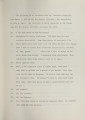
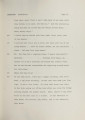
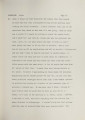
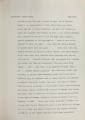
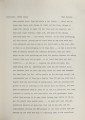
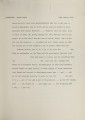
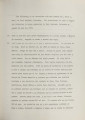
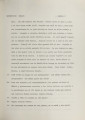
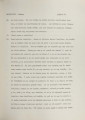
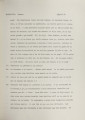
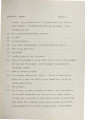
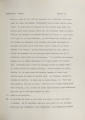
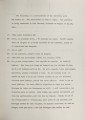
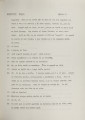
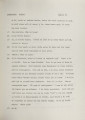
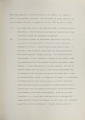
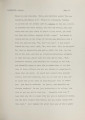
Show INTERVIffi~: Romero Page 13 would set up their camp, all of them would come there, and the shepherds would go out to take care of the flocks, this in the autumn. During the winter and at that time nature or rather the pasture that existed in those times, there was so much pasture that, that I can say with all frankness that the sheep couldn't possibly exhaust it. During the winter when the snows would fall, John Wilkes was very attentive, at that time some cars or trucks, Dodge type, would begin to go out . You may not believe me, but in those deserts, like the one north and south of Rawlins, Wamisera [Wamsutter], to the south of Bitter Creek, to the north of Bitter Creek, you could see piles and piles of grass as if they had been raised there. They used to bring them there for the sheep, they would take them in a train, and they would pile them in these places which was a benediction of God. We had there what we called grainaries [granaries], which were large tanks which the sheep owners would fill with oats. A grainary for example was the size commensurate with the number of sheep and sheep herders at that area. These grainaries also had cotton seed and corn, and we carnperos had to help the shepherds during that time. I had very good luck with my cornpa~ero Telesfor Barela, he was my friend and we traveled together in the most arduous parts, wherever |
| Reference URL |
https://collections.lib.utah.edu/ark:/87278/s62z2w60/1039187 |