| Title |
Spanish speaking peoples in Utah, oral histories: book 13, numbers 135 through 146 |
| Alternative Title |
Cornelio Candelaria, Old San Acacio, Colorado: an interview by John R. Tapia, August 10, 1973; Duván Luján, Genaro Court, New Mexico: an interview by Greg Coronado, August 5, 1973; Duván Luján, Albuquerque, New Mexico: an interview by Greg Coronado, August 5, 1973; Dr. Hector P. Garcia, Corpus Christi, Texas: an interview by Greg Coronado [August 10, 1973]; Ben Romero Sr., Fort Garland, Colorado: an interview by John R. Tapia, August 13, 1973 [in Spanish and English]; Ben Romero Sr., Fort Garland, Colorado: an interview by John R. Tapia, August 14, 1973 [in Spanish and English] |
| Creator |
Candelaria, Cornelio; Luján, Duván, 1919- ; Garcia, Hector P., -1996.; Romero, Ben, 1882- |
| Contributor |
University of Utah. American West Center; Coronado, Greg, 1946-2012; Tapia, John Reyna |
| Publisher |
Digitized by J. Willard Marriott Library, University of Utah |
| Date |
1973-08-05; 1973-08-10; 1973-08-13; 1973-08-14 |
| Date Digital |
2015-01-15 |
| Spatial Coverage |
San Luis, Costilla County, Colorado, United States, http://sws.geonames.org/5437682/ ; San Acacio, Costilla County, Colorado, United States, http://sws.geonames.org/5437633/ ; Fort Garland, Costilla County, Colorado, United States, http://sws.geonames.org/5422141/ ; Corpus Christi, Nueces County, Texas, United States, http://sws.geonames.org/4683416/ ; Albuquerque, Bernalillo County, New Mexico, United States, http://sws.geonames.org/5454711/ ; Taos, Taos County, New Mexico, United States, http://sws.geonames.org/5493811/ |
| Subject |
Mexican Americans--Colorado--History; Mexican Americans--Colorado--Biography; Mexican Americans--Colorado--Social conditions; Mexican Americans--Texas--History; Mexican Americans--Texas--Biography; Mexican Americans--Texas--Social conditions; Chicano movement--Texas; Chicano movement--Colorado; Chicano movement--New Mexico |
| Keywords |
Discrimination; Great Depression; Ethnic relations; Chicanos; Farm labor; Agricultural laborers; Railroad workers; Mexican Revolution; Mexican traditions; SOCIO; Catholic Church; Mexican immigrants; Mexican American children--Education; American G.I. Forum; Veterans |
| Description |
Transcripts of interviews held in 1973 with Cornelio Candelaria of Old San Acacio, Colorado; Dr. Hector P. Garcia of Corpus Christi, Texas, founder of the American G. I. Forum; and Ben Romero Sr., of Fort Garland, Colorado (in Spanish and English) |
| Type |
Text |
| Genre |
oral histories (literary works) |
| Format |
application/pdf |
| Language |
eng; spa |
| Rights |
 |
| Relation |
For description of each interview, see: http://nwda.orbiscascade.org/ark:/80444/xv23580 |
| Scanning Technician |
Matt Wilkinson |
| Conversion Specifications |
Original scanned with Kirtas 2400 and saved as 400 ppi uncompressed TIFF. PDF generated by Adobe Acrobat Pro 10 for CONTENTdm display |
| ARK |
ark:/87278/s62z2w60 |
| Topic |
Mexican Americans--Biography; Mexican Americans--Social conditions; Chicano movement |
| Setname |
uum_sspu |
| ID |
1039208 |
| Reference URL |
https://collections.lib.utah.edu/ark:/87278/s62z2w60 |
| Title |
Page 260 |
| Format |
application/pdf |
| Setname |
uum_sspu |
| ID |
1039175 |
| OCR Text |
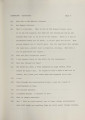
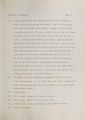
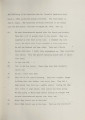
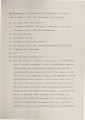
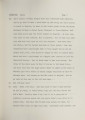
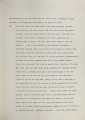
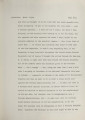
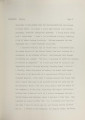
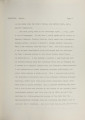
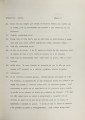
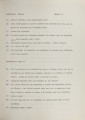
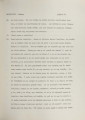
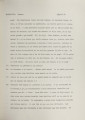
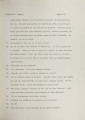
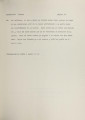
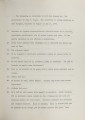
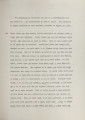
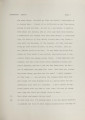
Show The following is an interview with Mr. Ben Romero, Sr., Route 1, Box 2, Fort Garland, Colorado. The interview is being conducted in Fort Garland, Colorado on August 13 and 14, 1973 by John R. Tapia. Part II. The following is an English translation of the interview which was conducted in Spanish. JT: Could you recount some other unusual occurrances in your career beginning perhaps with your first employment? BR: I've already told you about some of my employment in Taos, assistant postmaster; my wife was the postmistress. JT: You didn't talk to us so much about your duties as assistant postmaster, what were your duties? BR: In the post office, the people come there of course, and take out their letters. JT: Where was this located? BR: In Rancho de Taos. JT: Registered mail, important mail? BR: This occurred in 1910, and since then I was her assistant except when I left to go shear sheep in the north, and then she had as an assistant one of our young nephews [nieces?] who would help her. My wife taught her the duties while I was absent but when I would return, I was always there helping her. JT: How did you receive letters at this post office? BR: We received these letters by means of wagons with covered tops, a covered wagon. The mail originally was sent by rail |
| Reference URL |
https://collections.lib.utah.edu/ark:/87278/s62z2w60/1039175 |