| OCR Text |
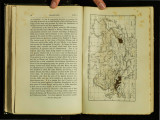
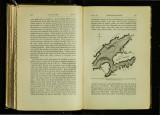
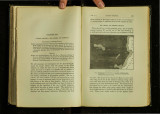
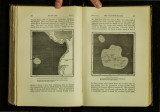
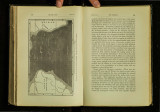
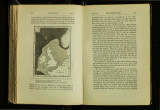
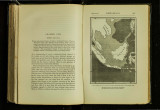
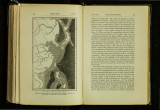
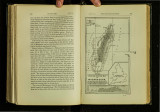
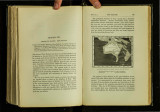
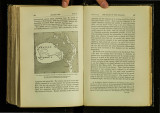
Show ISLAND LIFE. [PART H. 46-! _ - . - ---- ---- ~ pecies only, and. these that are represente d the re by a very ..l ew" s . 1 1 100 species. 180 genera mclude near Y ' z,·n:. 8 0,-r these two Flo1·as.- . ,-r the c ~JJ erence 'J Geological exp~anatwn OJ oint to the conclusion, that South- These facts agam clearly P t f the more extensive and 1. · tl e remnan o ·western Austra Ia IS l h t'nent in which the peculiar d t · of t e con I more i~olate por wn . ci all developed. The existence there Austrahan flora was pnn P 'ty -800 miles in length by nearly large area of gram e . ~ th' of a .v ery · ;vidth I. nd 1' 0a t es such an extenswn; .10r . IS 500 m. . maximums c' ertam. 'l y once b u ried under piles of stratified o-ramtlC mass wa h ~ ed the nucleus of the old b d d d t en .Lorm rock, since denu e ' an . t If we take the 1000-fathom A t lian contmen · Western us ra t f Australia to represent tho line around th.e south~~n ~~r 1 :d we shall see that it would probable extensw~ ?f tliS 0 a th of the Great Australian 'd dd twna area sou gi.v eh a WdI £e ma aI cont.m ent wh 'ch even if the greater part of 1 , . Big . t, 1a nA ot r. h. a were sub merg ed ' would be suffiCient for the troplCa us ra . 1' d bundant flora. We must also l t f a pecu Iar an a eleva opmen ° . f 6000 feet added to the vast b th t an elevatwn o ' . remem er . a been taken away by denudatwn, would amount whiCh has . 1 d'no- what are now the deserts h th hole country · me u I b . c ange · e w· · to a m'o unt a.m o us and well-watered regwn. of the ln~enor~ 1~ d eculiar flora was in process of forma- But while thiS nc~ an r the continent must either have been tion, the eastern portwnho t or had perhaps not yet risen 'd l t d. from t e wes ern . WI e y separa e The whole of this part of the country consists from the ocean. £ mations with granite and meta-of Pall~ozoickan~h~e~:~!~~~ryo~eposits being largely developed morp nc roc s, d · rr th whole length on both sid:s of the ce;tral ra.ng:~ ~~: ~~;k, a~d constituting ~!et~;e:~::•;:~: !~ot~e p~:::::r the Blue Mountains and ot~~ During some portion of the Secondary peno ' ~~!;ef:g:~is side of Australia must. have been al~~:! ;:~~~ submerged beneath the ocean; and If we suppose 1 't~ th' time the western part of the continent was at n~ar y 1 IS . hall have a suffiCient ex-maximum extent and elevatwn, we s ' Western l t. of the great difference between the flora of p ana wn ld 1 have been and E::tstern Australia, since the latter wou on y CHAP. XXII.] TilE FLORA OF NEW ZEALAND. 4G5 able to receive immigrants from the former, at a later period, and in a more or loss fragmentary manner. If we examine the geological · map of Australia (given in Stanfon.l's Compendium of Geography and Travel, volume "A1lSt?'alasia "), we shall see good reason to conclude that the eastern and the western ~ivisions of the country first existed as separate islands, and only became united. at a comparatively recent epoch. This is indicated by an enormous stretch of Cretaceous and Tertiary formations extending from the Gulf of Carpentarin. completely across the continent to the mouth of the Murray River. During the Cretaceous period., therefore, and probn.bly throughout a considerable portion of the Tertiary epoch, 1 there must have been a wide arm of the sea occupying this area, dividing the great mass of land on the west-the true seat and origin of the typical Australian flora-from a long but narrow belt of ln.nd on the east, indicated. by the continuous mass of Secondary and Palroozoic formations already referred to which extend uninterruptedly from Tasmania to Cape York. Whether this formed one continuous land, or was broken up into islands, cannot be positively determined ; but the fact that no marine Tertiary beds occur in the whole of this area, renders it probable that it was almost, if not quite, continuous, and that it not improbably extended across to what is now New Guinea. At this epoch, then (as shown in the accompanying map), Australia would consist of a very large and fertile western island, almost or quite extra-tropical, and extending from the Silurian rocks of the Flinders range in South Australin., to about 150 miles west of the present west coast, and southward to about 350 miles south of the Great Australian Bight. To the east of this, at a distance of from 250 to 400 miles, extended in a north and south direction a long but I From an examination of the fossil coruls of the South-west of Victoria, Professor P. M. Duncan concludes-" that, at the time of the formation o£ these deposits the central area of Australia was occupied by sea, having open water to the north, with reefs in the neighbourhood of Java." The age of tltcse fossils i!:l not known, but as almost all are extinct species, and some are almost ident·ical with European Pliocene nnd Miocene species they are supposed to belong to a corresponding period. (Journal of Geol. Soc., 1870.) IIH |