| OCR Text |
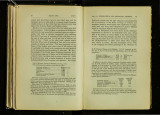
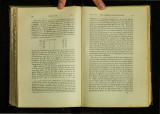
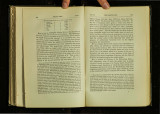
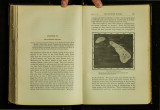
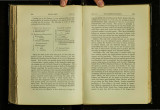
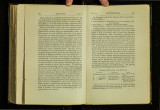
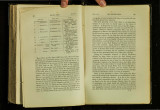
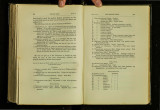
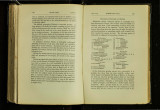
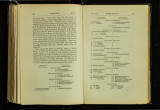
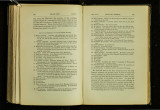
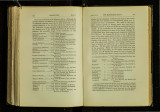
Show 274 ISLAND LTFK (l'AUT. IT. The land-shells are not abundaut-about twenty in all, most of them · peculiar species, but not otherwise remar~abl.e. The observation of Captain Coiluct, quoted by Mr. Darwm .111 his Jounutl, that drift-wood, bamboos, canes, and the nuts ot a, palm, are often washed on the south-eastern ~hores. of the islands, furnishes an excellent clue to the manner m which many of the· insects and land-shells may have reached the Galapagos. Whirlwinds also have been known to carry qurmtities of leaves and other vegetable debris to great heights in the air, and these micrht be then carried away by strong upper currents and dropped 0 at great distances, and with them small insects an.d mollusca, or their eggs. We must also remember .that volc~n~c islands are subject to subsidence as well as elevatiOn; and It JS quite possibl~ that during tl1e long period the Galapagos have existed some islands may have intervened between them and the coast, and have served as stepping-stones by which the passage to them of various organisms would be greatly facili~ate~. Sunken banks, the relics of such islands, are known to exist m many parts of the ocean, and. countless others, no doubt, remain undiscovered. · The J(eeling ]...;lands as illustratir"g the manner in which Oceanic Islands are Peopled.-That such causes as have been here adduced are those by which oceanic islands have been peopled, is further shown by the condition of equally remote islands which Acilin~ inci::;uH. Uopelatus galapagoensis. PAJ,PICOltN ES. Tropisternus lateralis. Philhyd.rus sp. STAPIIYLINID tl<:. Creophilus villosus. NECROPHACA. ACI·ihis s.errativentris. Phalacrus darwinii. Dcrmestes vulpinns. CuRCULIONIDA<:. Otiorhynchus cuneifonnis Anchonus galapugoeusis. LONCICOH~ lA. Eburia amabilis. H Wl'l!;ROMEJt.\. 8L0111ion hclopoidci:l. ,, lrovigatum. Ammophorus ol>scuruR. " " cooksoni. Lifoven.tnH. Pctlon~ces galapagoenf:iis. , puLesceu'-'. Pltalerin. manicata. ANTHHI13IDM. Ormiscus variegatui:l. PHYTOI'HAGA. Di1tLrotica limbata. Docema galapngoensis. Longitarsus lunatus. Sn:CURTPALPER. Scymnus galapagoensis. CTIAI'. Xlll.l 'l'IIE GA LAP.AGOS ISLANDS. 275 we know are of comparatively recent origin. Such are tho Keeling or Cocos Islands in the Indian Ocean, situated about the s~mc distance from Sumatra as the Galapagos from Sout.h Amenca, but mere coral reefs, supporting abundance of cocoanut pa1ms as their chief Ycgetn,tion. These islands were visited ~y Mr. Darwin, and their natural history carefully examined. Ihe only mammals arc rats, brought by a wrecked. ves~el ancl said by Mr. Waterhouse to be common English rats, "but smaller and more brightly coloured;" so that we have here an illustration of how soon a difference of rac.e is established under a constant rind uniform difference of conditions. There are no true land-birds, but there are snipes and rails, both apparently commo.n Malayan species. Reptiles are represented by one small hzard, but no account of this is given in the Zoology of the V()va,qe of tlle Beagle, and we may therefore conclude that it was an introduced species. Of insects, careful collecting only pro-duced thirteen species belonging to eight distinct orders. The only bettie was a small Elater, the Orthoptera were a GryUus and a Blatta; and there were two fiies, two ants, and two small moths, one a Dioprea which swarms everywhere in the eastern tropics in grassy places. All these insects were no doubt brouo·ht either by winds, by fioating timber (which reaches the isla~ds abundantly), or by clinging to the feathers of aquatic or wadincr birds; and we only require more time to introduce a crreate~ . 0 variety of species, and a better soil and more varied vegetation, to enable them to live and multiply, in order to give these islands a fauna and flora equal to that of the Bermudas. Of wild plants there were only twenty species, belonging to nineteen genera and to no less than sixteen natural families, while all were common tropical shore plants. These islands are thus evidently stocked by waifs and strays brought by the winds and waves; but their scanty vegetation is mainly due to unfavo~rable conditions-the barren coral rock a.nd sand, of which they are wholly composed, together with exposure to sea-air, being suitable to a very limited number of species which soon monopolise the surface. With more variety ol soil and aspect a greater variety of plants would establish themselves, and these would favour the preservation ::md increase of more insects, '1' 2 |