| OCR Text |
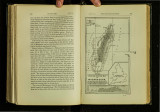
Show 452 ISLAND LIFE. (PART H. . t ~ s of birds-those with the Cretaceous pcnod, the two grea 1orm d h · th a keeled sternum and fairly-developed wings, an . t ose wl 1 da d. t y wmo-s-a rea y convex keel-less sternum and ru Imen ar b existed side by side; while in the still earlier Archreopter~x of h J . . d have a bird with well-developed wmgs, t e urass1c peno we W · d tl (.tnd therefore probably with a keeled sternum. e ~re evi en y, there1~o re, very 1~ ar f rom a knowledge of t.h e earher stages of b I. r d l'1£ e , and our acquam. t ance with the vanous forms that ha. ve exi. ste d I.S scan t y m. the . ex treme ,. but we may be sur.e that buds acqm.r e d wm. gs, and 1~ ea ther~;: ,, and ·s ome power of flight, b. efore t l1 ey d eve l ope d a k ee 1e d sternum , since we see that ba.t s With. no sue h k ee l fl y very we ll . Since , therefore ' the strut h. wus bir. ds all have perfect feathers, and all have rudimentar~ wmgs, wh1eh are· anat omi·C a lly those of true birds , not. the rudim. entary foro-legs of reptiles, and since we know ~hat 111 m~ny higher groups of birds-as the pigeons and the ra1ls-the wmgs have becomo more or less aborted, and the keel of the sternum greatly reduced in size by disuse, it seems probable that the very remote ancestors of the rhea, the cassowary, and the apteryx, were true flying birds, although not perhaps provi~ed with a keeled sternum, or possessing very great powers of flight. But in addition to the possible ancestral powE:r of flight, we have the undoubted fact that the rhea and the emu both swim freely, the former having been seen swimming f~om island. to island off the coast of Patagonia. This, taken m connectiOn with the wonderful aquatic ostrich of the Cretaceous period discovered by Professor Marsh, opens up fresh possibilities of migration; while the immense antiquity thus g~ven to the group and · their universal distribution in. pa~t tune, renders all suo-gestions of special modes of commumcatwn between the parts b of the globe in which their scattere~ rem.nants now happen to exist, altogether superfluous and mislead.mg .. The bearino- of this argument on our present subJect Is, that so far as . acco~nting for the presence of wingless birds in N ~w Zealand is concerned, we have nothing whatever to do With any possible connection, by way of a southern con~inent. or antarctic islands., with South America and South Afnca, because the nearest_. allies of its moas. and kiwis are the CllA:f'. XXI.] NEW ZEALAND. 453 cassowaries and emus, and we have distinct indications of a former land extension towards North Australia and New Guinea, which is exactly what we require for the original entrance of the struthious type into the New Zealand area. Winged Bi1·ds ctnd lower Vertebrates of New Zectlctnd.-Having given a pretty full account of the New Zealand fauna elsewhere 1 I need only here point out its bearing on the hypothesis now advanced, of tho former land-connection having been with North Australia, New Guinea, and the Western Pacific Islands, rather than with the temperate regions of Australia. Of the Australian genera of birds, which are found also in New Zealand, almost every one ranges also into New Guinea or the Pacific Islands, while the few that do not extend beyond Australia are found in its northern districts. As regards tho peculiar New Zealand genera, all whose affinities can be traced arc allied to birds which belong to the tropical parts of the Australian region; while the starling family, to which four of the most remarkable New Zealand birds belong (the genera Creadion, Heterolocha, and Callreas), is totally wanting in temperate Australia and is comparatively scarce in the entire Australian region, but is abundant in the Oriental region, with which. New Guinea and the Moluccas are in easy communication. It.is certainly a most suggestive fact that there are more than sixty genera of birds peculiar to the Australian continent (with Tasmania), many of them almost or quite confined to its temperate portions, and that no single one of these should be represented in temperate New Zealand.2 The affinities of the living and more highly organised, no less than those of the extinct and wingless birds, strikingly accord with the line of communication indicated by the deep submarine bank connecting these temperate . islands with the tropical parts of the Australian region. The reptiles, so far as they go, are quite in accordance with 1 Geographical Distribution of Animals, Vol. I., p. 450. 2 In my Geographical Distribution of An-imals (I. p. 541) I have given two peculiar Australian genera ( Orthonyx and T?"ibonyx) as occurring in New Zealand. Bnt the former has been found in New Guinea, while the New Zealand bh·d is considered to form a distinct genus, Clitonyx; ·and the latter inhabits Tasmania, and was recorded from New Zealand through an error. (See Ibis~ 1873, p. 427.) |