| OCR Text |
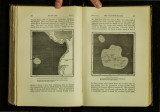
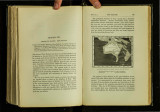
Show l (j2 ISLAND L T:FE. (PART I. · · ay accumu l a t 0 · With_ u..s at by very high land on whJCh 1Ce m d gra.phical cond1t10p.s . the other han ' geo . . the present t1me, on 1 . fluence of excentn01ty, d verse t 1e m completely ma~k an. even_ re . in .the northern, and summer and that of wmter m pcT~helwn . h In the north we . . . th n hemisp ere. . in penhelwn m the sou er . h' the Arctic Circle, and of f ea w1t m . have a preponderance o s I the south exactly opposite lowlands in the temperate zone. h n preponderance of land 'l £ th e we ave a conditions preva1 , or er . h. · the Antarctic circle, and of (and much of it high land) ~~! 1~erefore, accumulates in the sea in the temperate zo~e. f ' easily melted in summer, '1 th' oatmg o snow, south, wh1 e a m c th and these contrasts react .£' t ·n the nor ; is the prevalent 1ea ure 1 t t that in the southern ocean, l. t to such an ex en ' . upon c 1ma e . f I 1 d have glaciers descendmg to . th I· titude o re an . . islands m e a d t nt snowstorms in the he1gbt of f th an cons a the level o e sea, . then actually nearer the earth summer, although the sun lS t . . d . 0' our northern summer . than ~t IS . urmb h c that the phenomena presented by the It lS evident t erelore, l 1 t . ' f Mars are in no way oppose< to t 1a ·ymg polar snows o · · h · 1 var . . f Dr Croll's theory of the cond1t10ns w IC 1 modificatwn o h . 1 'al epochs of our northern hemisphere, b O'ht about t e g acic: . ro~b . d t d. but are perfectly exphcable on tho same whiCh IS here a voca e ' . . . b t . . 1 ·r keep in mind tho t.hstmctwn o ween O'eneral prmclp es, I we . ll d' .. h ba n I. ce-shcet-w hI'C h a su mmer's sun cannot matena dy 1mdm .i st , but may even m. crease by brinob· inOb' vapour to be con ense m o 1 d d thl·n snowy covering which may be annually mete snow-an a · · d 1 and annually renewed , WI· th bO 'reat rapidity an over arge areas. 'tl. the small circles of perpetual polar snow t 1l ere Except WI nn c • d tb can at th e pre sent time be no ice-sh. eets m Mars·; an de h thi·s permanent snowy area IS more extensive aroun reason w Y b tl d the northern than around the southern pole rna! e par y. ue to hI. 0'} 1 e r 1a n d at the north ' but is perhaps suffic. iently ·e xplawtcl d by t hoe d1' mm· 1· s h e d power of the summer sun, owmg to .1 ts grca Y . d dl'stauce at that season in the northern hemisphere, so Increase h' h h that it is not able to melt ~o much ?f the snow w lC as accumulated duriBg the long mght of wmter. CHAPTER IX. ANCIENT GLACIAL EPOCHS, AND MILD CLIMATES IN THE ARCTIC REGIONS. Dr. Croll's views on ancient Glacial Epochs-Effects of Denudation in destroying the evidence of remote Glacial Epochs-Rise of sea-level connected with Glacial Epochs a cause of further denudation-What evidence of early Glacial Epochs may be expected-Evidences of I ce· action during the Tertiary Period--The weight of the negative evidence- Temperate climates in the Arctic Regions-The Miocene Arctic flora-Mild Arctic climates of the Cretaceous Period-Stratigraphical evidence of long-continued mild Arctic conditions--The causes of mild Arctic climates-Geographical conditions favouring mild northern climates in Tertiary times-The Indian Ocean as a source of Heat in Tertiary times-Condition of North America during the Tertiary Period -Effect of high excentricity on warm Polar climates-Evidences as to climate in the Secondary and Pa.lreozoic Epochs-Warm Arctic climates in early Secondary and Palreozoic times-Conclusions as to the climates of Secondary and Tertiary Periods-General view of Geological Climates as dependent on the physical features of the Earth's surface-Estimate of the comparative effects of geographical and physical causes in producing changes of climate. IF we adopt the view set forth 1n the preceding chapter as to the character of tbe glac~al epoch and of the accompanying alternations of climate, it must have been a very important agent in producing changes in the distribution of animal and vegetable life. The intervening mild periods, which a1most certainly occurred during its earlier and later phases, were sometimes more equable than even our present insular climate, and severe frosts were probably then unknown. During the eight or ten thousand years that each such mild period lasted, some portions of the M 2 |