| OCR Text |
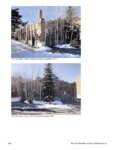
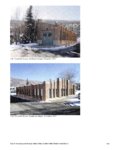
Show Xll cottages were sometimes remodeled into four-square plans by adding rooms between the stem and wings. The last historical plan was the bungalow, favored throughout the years 1900-20 when taste vacillated again toward the picturesque. Bungalows are relatively rare in Park City because their heyday corresponded to a low period in the city's economic history. Besides the bungalow, Park City missed out on several other subsequent trends in American residential architecture over the next several decades because of the area's depressed economy and peculiar topography. Few period revival cottages or Frank Lloyd Wright-inspired Prairie bungalows are found in or nearby Park City. Nor will one find any early-modem International Style structures. Since the Park's renaissance as an upscale ski resort community, modem architectural styles have flourished in the hills above the historic district. Many of these vacation homes are influenced by multilevel California Style, designed to accommodate hillside sites. Another popular plan is the A-frame, ubiquitous to American resort communities. The first A-frame was designed by a Wright draftsman, Rudolph Schindler, who, while working in California's Lake Arrowhead community, was able to convince city planners that the unusual structure fit within their guidelines for "Norman Style" houses. Park City's commercial structures can be traced back no earlier than the 1898 fire which all but decimated the business district. Immediately thereafter merchants built typically Victorian mining-town structures. A simple wood-frame building with a steep roof was hidden behind a flat-topped, street-side fa<;ade. At the tum of the century commercial fa<;ades were decorated with wood cornices, and indented entranceways were placed between two display windows. Transoms began appearing over doors and windows, and stone and brick buildings emerged with an occasional arch, Queen Anne-style brickwork, or columns and piers. After Park City's 1960s rebirth, city planners envisioned one general style of commercial architecture that could lend itself to different interpretations. Officials used the term "Park City Style" when putting forth their architectural vision. They believed this would help achieve some kind of continuity in commercial districts. Ideally, buildings in Historic Commercial Zones were to recall, but not necessarily replicate, the city's boomtown Victorian structures. Today two primary examples of this Park City Style can be found at either end of Main Street: the loose interpretation featured in the Main Street Marketplace Mall and the more derivative look of the Summit Watch Development. |