| OCR Text |
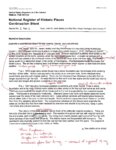
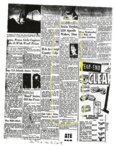
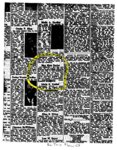
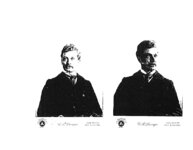
Show 1118 LATTER-DAY' SAINT tram this union there are the followIng chUdren: SterUng B., born May 21,1889; Paul B., born Dec. 21,1891; ZelIa, born Aug. 3, 1894, died of pneumonia Aprtl 27, 1896; Elsie, born Aug. 16,1896; James Karl, born Aug. 29, 1898; Luelle, born May 29, 1900; Helen May, born Oct, 24, 1902, and John Russell, born Feb. 1,1911. Bro. Talmage obtained hIs early schooling in the 'National and Board schools cif his home district In, England, and was an Oxford diocesan prize scholar in 1874. He entered the Brigham Young Academy (now UnIversity) at Provo, Utah, in 18J6, 'a~d ' foUowed to completion the- ' hIgh school and normal courseS, ~nd in his 17th year was a teachel-. /of elementary scIence ' and Engllsh In the institution named.. His early predilection was for the sciences, and in 1882-83 he took a se-. lected course, mainly in chemIstry and geology, at LehIgh University, Bethlehem, Pa. Though a special student and not a candidate for a degree, he passed during hIs single year of resi,Ience nearly all the examinations in , l1e four-year course and was later t: raduated; and In 1883-84 he was engaged in advanced work at Johns Hopkins University, Baltimore, Md. He returned to Utah in the fall of 1884, In response to a summons from the home institution, and served as professor of geology and chemistry, with varied activities in other departments, in the Brigham Young Academy from 1884 to 1888. While still a member of the faculty, he was elected a member of the board of trustees of the Brigham Young Acad- ' emy. ,During his residence in Provo, he served successively as city councilman, alderman and justice of the peace. In 1888 he was called to Salt Lake City to take the presidency of the Latter-day Saints College, which position he held until 1893. He was president of and professor of geology in the University of Utah, 1894-97. In the year last named he resigned the presidency, but retained the chair of geology, which had been spec1aU,. endowed; and ten years later (1907) he resigned the professorship, to fol-, low the practical work of mining ge.:, ology, tor which his servlc;es were In great demand. In 1891 he received the degree of Bachelor of Science, and' in 1912 the honorary degree of Doi;.:;~' tor of Science, from his old a~': mater, Lehigh University. In. 1890 ; he was given the honorary degree of Doctor of Science and Didactics b,.:': the Church of Jesus Christ of Latter":' day Saints, and In 1898 was a~arded ' the Doctor of Philosophy ' degree by ' I1linoll Wesleyan University for nonresident work. ' Dr. ,Talmage has been elected to llfe membership in several learned societies, and for many years has been a Fellow ot the Royal Micro- , scopical Society (London), Fellow of the Royal Sc~tt1sh Geographical Society (Edinburgh), Fellow of the Geological Society (London), Fellow of the Geological Society of AmeriCa, Fellow ot the Royal Society of Edinburgh, Associate of the Philosophical Society ot Great Britain, or Victoria Institute, and Fellow of the American Association for the Advancement of Science. Dr. Talmage has traveled extensively, having traversed most of this country and of Europe many times in the course of scientific pursuits. He was a delegate from the Royal Society of Edinburgh to the International Geological Congress held at St. Petersburg (Petrograd» in 1897, and was a member of the party that crossed the Urals into Siberia. Throughout the period ot his professional career as teacher and professor, Dr. Talmage was particularly active and efficient in encouraging scientific study by popular lectures and writings, and for this labor his deep love for science and his exceptional command of language and abillty as a public 8peaker particularly fitted him. Impelled by the same spirit, he took charge of the little Deseret Museum in 1891, and had the satisfaction of seeing the institution become large and iunuen- BIOGRAPHICAL ENCYCLOPEDIA. tiaI. He retained the directorship until 1919, when the Deseret Museum ceased to extst as a unified- institution, Its collections being segregated to form the L. D. S. University Museum, and the L. D. S. Church Museum, respectively. In his teaching work Dr~ Talmage was the first to establllh courses In domestic science and arricultural cheml8try' In the in,termountaln West. When called to special ministry In the Church he promptl,. relinqulshed. his profession as a mining geologi8t and engineer, the practlce ot which had grown to be utenalTe and lucrative, and 8ince that time he has devoted himself entirely to ecclulastlcal service. Dr. Talmage is the author of many selentltlc and theological , works, among which are: "FIrat Book of Nature" (1888); "Dom~stlc Science" (1891); "Tables for Blowpipe Determination of Minerala" (1899); "The Great Salt Lake;Present and Past" (1900); "The Artlcle8 of Faith" (1899), a comprehensive exposition ot the doctrines of the Church; "The Great Apostasy" (1909); "The House of the Lord" (1912), a di8cussion ot holy sanctuaries, ancient and modern; "The Story ot Mormonllm" (1907) ; lectures delivered at Michigan, Cornell and other universities; "The Philosophical Basi8 of Mormonism" (1915); "Jeaus the Christ" (1915); "The Vitality of Mormonism" (1919), and numerous pamphlets and contributions to periodicals. Blahop Orson F. Whitney, author of the "History of Utah," says of him: "Protessionally a scientist and a preceptor, with gi~ and powers equalled by few, Dr. Talmage 11 also a writer and speaker of great abll1ty and sklll. He is an absolute master ,o f Engllsh, both by pen and tongue, and poueases a musical eloquence of marvelous fluency and prec1alon. HIs 8tyle ot oratory, though not stentorian, is wonderfully impressive, and his well stored mind, capacious , memory, quick recollection and remarkable readiness of speech 789 render him a beau-ideal instructor In public or in private." TA.YLOR, Job WhItaker. (Contin, ued from Vol. 1:1&1.) As a youngel member of the Council of Twelv« Apostles lohn W. Taylor traveled ex· tenslvely in the d1tferent Stakes 01 Zion (atter pre~idlng for seTeral yearl over the Colorado Mfaslon) • attendin! Stake conferen,cea and a ..latlng In or· ganizing and re-organizlng Stakes anel Wards. But as a difference ,of oplDtoJl arose between him and the Firat Pres· idency of the Church and , the memo bers of his OWn quorum in regard tel the manifesto laaued by ' President Wlliord Woodruff Concerning plural marriage':' Bro. Taylor reelgnecl from his position - as one of ~e Twelve Apostles tn April, 1908. After that he retired to pri1'&te life and spent the remainder of hll days attending to necessary labors in prondtng for his large family. Bro. Taylor died at hl8 home in Forest Dale, Salt ,L ake county, Utah, Oct. 10, 1918. In an obituary pubUshed in the "Deseret Evening News" on the day of his demlle the following occurs: "EArly In llfe 10hn W. Taylor developed a marked 8pirltuality and was the recipient of manY ,manifestations of the power of God. HlI testimonies of the gospel and of the missions ot the Savior and the Prophet Joseph Smith were deeply grounded in his soul, and to them be remained firm and unshaken to the end. Hla 1n8pIred di8courses wlll never be forgotten. He wlll be remembered as one tilled with the inspiration of the Holy Ghost; his teachings and testimonies were a source ot renewed diligence and encouragement to the Latter-day Saints. He was fllled with the spirit ' of prophecy, and many of his utterances have realized a striking fulf1llment. In a temporal capacity 'he took great Interest in the colonization of the unsettled parts ot the country, and he was especially interested. in the development ot the settlemellts in Can- * * * |