| OCR Text |
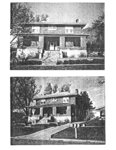
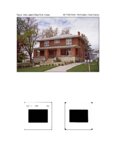
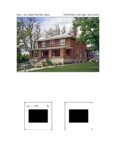
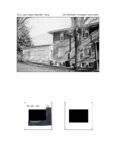
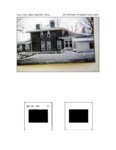
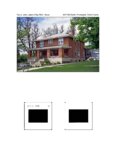
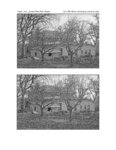
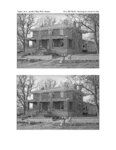
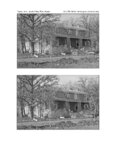
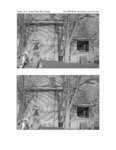
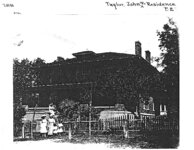
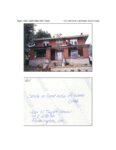
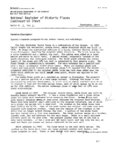
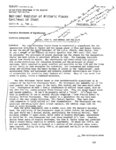
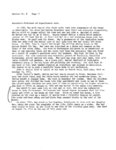
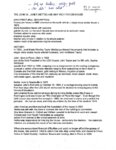
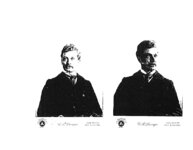
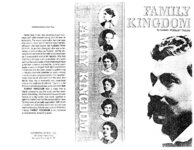
Show NPS Form 10-900-. U1ah WordPerfect 5.1 FOrma1 (Revised Feb. 1993) OMS No. 10024-0018 United States Department of the Interior National Park Service National Register of Historic Places Continuation Sheet Section No . ...a. Page-±. Taylor, John W., Janet (Nettie) and May Rich , House, Farmington, Davis County, UT John was born in Provo, Utah in 1858 as a son of the third president of the Church of Jesus Christ of Latter-day Saints (LOS), John Taylor, and his fifth wife, Sophia Whittaker. He was active in the LOS church, serving as an apostle from 1884 to 1905, eventually resigning over a disagreement on the ending of polygamy. He pursued a variety of business interests ranging from land speculation deals in Canada and the Utah desert, gold mines in Mexico, irrigation projects, and the development and marketing of a rungless ladder. City directories list him variously as merchant, book-keeper, stock raiser, real estate agent, apostle and capitalist. Nettie was born in Grantsville, Utah in 1870 to Samuel Wickersham Woolley and his second wife, Rachael Cahoon. Nettie became John's third wife on October 10, 1890, in a carriage moving around Liberty Park in Salt Lake City, four days after the LOS church announced its decision to end polygamy in the Woodruff Manifesto. 9 They had eight children: Joseph, Raymond W., Paul W., Samuel W., Rachel (Sherwood), Ruth (Williams), Lillian (Hoover) and Oell (King). John married three additional wives during the time Nettie owned the house in Farmington; Eliza Roxie Welling and Rhoda Welling in 1901, and Ellen Georgina Sandberg in 1909. John was known as "The Champion of Plural Marriage" and even though the LOS church abandoned the concept in 1890, he continued to marry and practice the principle. He had six wives and thirty-six children by the time of his death in 1916. John hired an architect for the plans of the house but he personally built the stone foundation of the house in 1901. A full basement was excavated to provide space for a family industry where the whole family could fulfill John Taylor's dream of "a family all working together, manufacturing, producing, consuming." 10 Nettie was left to oversee the rest of the building to completion. She hired Edward A. Cottrell and William Levedall to do the brick work and Joseph Christensen from South Farmington as the carpenter. 11 She arranged to have the front dormer added, to the chagrin of John.12 Nettie finished the house and lived in it with her children. The house was mortgaged to provide funds for one of John Taylor's business deals to irrigate the Utah desert, the Buckhorn project. The deal was not successful and the mortgage on the house was "lifted" by May Leona Rich, John's first wife, in 1909, as she took title of the house. 13 Nettie then moved to Provo with her children. She eventually bought and ran a boarding house until her children were grown. After the children left she divided the boarding house into apartments and moved into one of them. She was active in the LOS Relief Society and served as vice captain of Camp 46 of the 9 Jorgensen, Victor W. and B. Carmon Hardy. "The Taylor-Cowley Affair and the Watershed of Monnon History." Utah Historical Quarterly Vol 48, NO. 1 (Winter 1980}:11 . 10 Samuel Woolley Taylor, p. 241. 11 Hess, Margaret S. My Fannington (Salt Lake City: Moench Letter Service, 1976). 12 The family history refers to a "cupola" that was added by Nettie. A photograph c. 1923 shows a front dormer. It can be assumed that the "cupola" is really a donner. 13 Samuel Woolley Taylor, p. 236. ..x See continuation sheet |