| OCR Text |
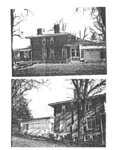
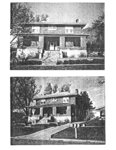
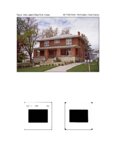
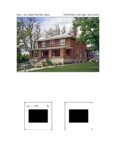
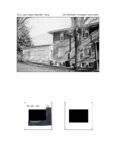
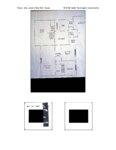
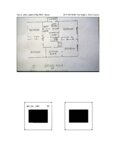
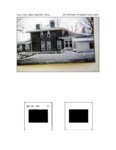
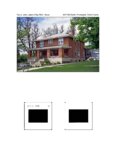
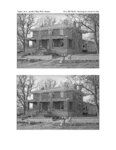
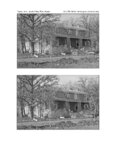
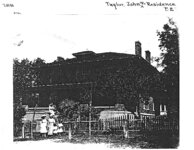
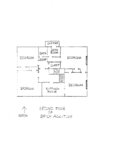
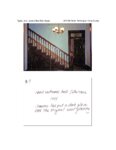
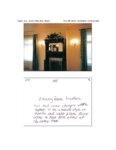
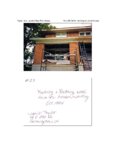
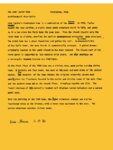
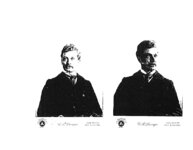
Show NPS Font 10·900· . \/toll WonII'orfect 5. 1 FontIt (Revised Fell . 1993) United States Department of the Interior National Park Service National Register of Historic Places Continuation Sheet Section No. ~ Page ~ I .l . ~ Narrative Statement of Significance ~ (summary paragraph) " t~· t;- ~'1'" UT .- ....' ~' V'... ~,.;\ ..,o~~ Q~ v:> \.-(..0" -v and Nettie and May Rich (narrative) The Jo Whittaker Taylor house is historically significant for its association with ohn W. Taylor and his unique place in Utah and Mennon history. He was the son f the tb..l,rd President of the L.D.S. Church, John Taylor. John W. was a of thet..·~Uncil of Twelve Apostles from 1884 until 1905, when he resigned The principle of plural marriage was the reason for his resignation. Taylor was also active in political affairs in Utah. His business interests spread from canada to Mexico. His adventurous and canplicated life portrays his strong convictions for religious freedoms and the principle of plural marriage, which resulted in great conflict and sacrifice in his life and the lives of his family as Utah struggled for statehcx:xi. His courageous and industrious wives and children bore the heavy burdens of living in the "underground", each maintaining farms and businesses and enduring constant surveillance and threats of prosecution for shielding their husband and father • Many of them IIDved from place to place, living a vagabond existence. The John Whittaker Taylor house is also architecturally significant as an example of the American Foursquare house. The Foursquare was ~:t~ one of the most popular new house types in the early 20th Century and few were built after 1930. Foursquares do bear a family resemblance to earlier house types, such as the 18th Century, center-passage Greek-Italian cube. They all share hipped roofs and facade syrrmetry. It can't be properly called a "style". It's1:asic box that is presented in one of several stylish wrappings - from Prairie School to Colonial Revival Foursquare. They appeal to a generation who may have been tired of the very ornate Victorian, 19th Century feeling. They were also less expensive to build without all that ornamentation. The Foursquare was very practical and being built above a high basement, the cubical shape made the most of every buildable inch. . When the great Depression cast a sudden chill over the Nation's building boom, the popularity of the Foursquare began to wither before the onslaught of the post World War I Revival styles, particularly the Colonial Revival. When building resumed 1 5 years later, after years of housing shortages, exacerbated by World War II, the Foursquare had long since breathed it's last. Sanetime during those years of housing shortages, the John W. Taylor house was converted from a single family dwelling to several aparbnents. In alx:mt the 1970's, all but one apa:rtment, which is located in a portion of the original adobe house, were rerroved. During the early 1990' s, an aparbnent was built in the basement of the Foursquare. -X.... See continuation sheet 0.8 |