| OCR Text |
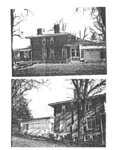
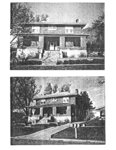
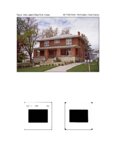
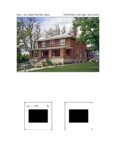
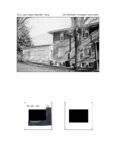
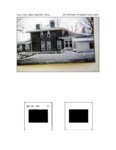
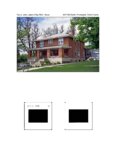
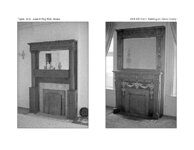
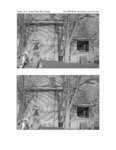
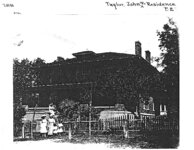
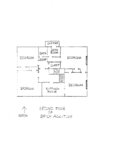
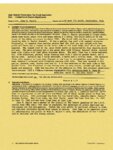
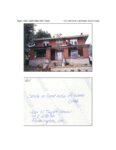
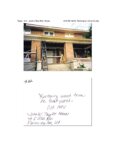
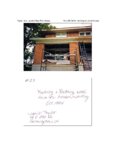
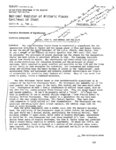
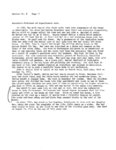
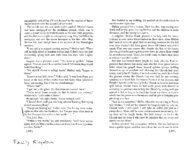
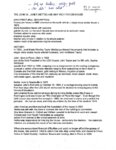
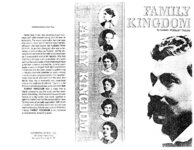
Show NPS Form 10·900·a Utah WordPerfect 5.1 Format (ROYised Feb. 1993) OMB No. 10024-0018 United States Department of the Interior National Park Service National Register of Historic Places Continuation Sheet Section No. JL Page~ Taylor, John W., Janet (Nettie) and May Rich, House, Farmington, Davis County, UT Narrative Statement of Significance Built in 1901, the John W., Janet (Nettie) and May Rich Taylor House is significant architecturally as the only extant example of a foursquare house type in Farmington. A c.1878 single story adobe structure was expanded on its south side in 1901 by the addition of a two-story foursquare house type with Neoclassical stylistic elements. This early twentieth century architectural type was a rejection of the complex, asymmetrical compositions of the Victorian era. It looks back to the Classical geometric, symmetrically balanced structures of the early Mormon settlers. The foursquare was a popular house type in Utah from 1900 to 1920. 3 HISTORY: Davis County was used as common pasture land by the Mormon pioneers soon after their arrival in Salt Lake City in 1847. One of the originally assigned herders, Hector C. Haight, settled permanently in Farmington and is considered its founding father. Additional settlers arrived in Farmington and settled in a haphazard pattern on individual farm tracts, rather than in the planned manner of other Mormon villages. In 1853 Brigham Young, the President of the LDS church, requested that all Mormon communities wall themselves in as a protective measure against Indian troubles. Farmington was surveyed, blocks laid out and the walls for the fort begun,4 but never completed and by the 1860s all walls were leveled (no portion of the walls remain). In 1900, Janet Maria Woolley Taylor (Nettie) purchased the property that included a single-story adobe houseS with her husband, John Whittaker Taylor. 6 Because the first and second wives (May Leona Rich and Nellie Eva Todd) lived nearby and John wanted to avoid jealousy among his wives, he stated that he was "fixing over a small house" 7 rather than building an entirely new house for his third wife. He wanted it to be, however, "the finest house in Farmington."s This desire to avoid an ostentatious exterior and still provide a fine interior may explain the restrained simple exterior and the contrasting ornate interior of the house. 3 Thomas Carter and Peter Goss. Utah'S Historic Architecture. 1847-1940. Salt Lake City, Utah: University of Utah Graduate School of Architecture and Utah State Historical Society, 1991 , p. 49. 4 The walls were to be of mud ten feet high, four feet thick at the bottom and two and a half feet thick at the top. 5 Leonis Hambin Kennard built the original single story adobe house in 1878. 6 His name does not appear on the litle. 7 Samuel Woolley Taylor. Family Kingdom. New York: McGraw-Hili, 1951 . p. 160. Sibid. -X See continuation sheet |