| OCR Text |
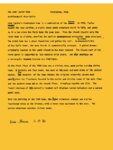
Show kid howling at the top of the swaying tripod except by giving moral support. There was no reaching him. If he got down, it had to be under his own power. As the son of the manufacturer, I appointed myself instructor, public relations department, and morale booster among the local small fry. In a crisis, my job was to buck up courage, calm wild terror, and try to get the kid to keep his head and use his feet. I would offer soothing words of instruction from below. If that failed, I would ascend another ladder, demonstrating how simple and easy it was. If something went wrong with my demonstration and I found myself tumbling head over heels to the dust, I would stifle my groans, force a gay laugh, and claim I was doing tricks. While I never admitted defeat, I still bear the scars of the TwoStep Ladder. My educational program failed. Pressure from irate parents forced the Two-Step Ladder under lock and key. Father had literature pri"nted, and the older boys, acting as salesmen, became adept at demonstrating to suspicious farmers the merits of the Two-Step Ladder. But apparently the time hadn't come for the world to embrace this revolution in the ladder industry. We heard dark rumors that the Ladder Trust had started a whispering campaign against our superior product. One day Father arrived with a buggy loaded with bales of Navajo blankets. "They're lovely," Mother said as we unpacked them and spread them on the area of concrete before the brick bam. "But they must have been terribly expensive, John." It was another low period of the violent fluctuations of the financial barometer. Father beamed. "Didn't cost me a cent, Nettie. I traded straight across for my patent rights in the Two-Step Ladder." "Thank goodness," Mother breathed. But we kids were appalled. Perhaps because of its very harebrained nature, we all loved the Two-Step Ladder. No doubt, children of our father, we were born windmill tilters. It began to rain suddenly, and we hustled the Navajos into the [ 258] house, taking a shower bath at the kitchen steps from an overflowing eaves gutter. When the squall passed, Father said, "Raymond, get a ladder, and I'll clean that gutter." Raymond got the key, dashed to the bam, and lugged back a Two-Step Ladder. Father gave it a single glance. "Do you want me to risk my neck on that fool contraption? Get me a ladder!" One thing about Father, when he gave up a project, he was through with it. Years later, Raymond was out with a friend selling knitted goods. During a ride between towns, Raymond told the story of the Two-Step Ladder. "And do you know," he said disgustedly, "Father sacrificed all his rights to that valuable invention for a few lousy bales of Navajo blankets." "That so?" the friend said. "You know, my father gave several bales of the finest Navajo blankets ever made for the patent rights to a harebrained invention called the Two-Step Ladder!" Father's arrivals home were always notable for something, but perhaps his most spectacular reentrance into our lives was when he came speeding into view on a rubber-tired sulky drawn by a high-tailed race horse, with kids clinging to every available handhold. At our wild whoops of glee, Mother looked out the window, shook her head, and said, "What next?" Just what Father wanted of a race horse was somewhat obscure. POSSibly he had picked it up as part of some deal, or possibly he had the same eye for beautiful horses as for beautiful women. The race horse was named Tom Marshal, but we kids were firmly convinced this was an alias and that in truth the horse was the famous pacer, Dan Patch. Whatever its name, it was the spookiest creature ever to be coaxed between shafts. It would bolt at a shadow. If an automobile appeared, we had to make a snap judgment whether to dive over the wheel or stick to it and take the worst. For some reason we always stuck to it. Mother had taken one wild ride-in the buggy, refusing any part of the racing sulky -and had returned with her hair Hying and the fixed look in her [ 259] |