| OCR Text |
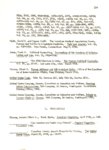
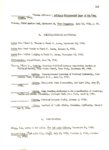
Show 172 At another time he ,aid: Con we not beg.in. to build our notional economy upon the welfare of men, women, and children instead of upon the welfare of corporations, profits, and dividends? Oh, I know I shall be told that I do not understand that divi dends go on to people and that profits make more work. I understancl these thIngs. I understand all such arguments, but let ask, if they ore iustifled on the scor. of helping and children indirectly, then any oct which h. for its purpose the upbuilding of the eeenemte life of men, women, and chtldren directly con be iustifled both by the SGme logie <mel in the same economic theory. A direct benefit is quite as consistent as an indirect one.1S men, and further be me women briefly said: the finest way to get a united the stQndorcis of the people. 19 • Then • • • extending his objective hesitate to people us CH a by raising into the field of international relations he did not make the characteristic point of what aids else, what oids is one nQtion (lids the rest of the world. person aids everyone He said: An oetive, positive poliey means the offering of co operative interest ona aid to every movement which will edvance the standard of living throughout the eQrth and security for the people of the earth. I do not advocate such on Ideo as thls on the bosis of humanitarianism; although I do belittl e such an ideo. I advocote It on Q basb of down right selfishness. The fruits of such stability and an increase in the stondord of living would not only solve our own pro blem but we ours,elves would Irkely be the greatest secondary benefieiorie$. America, dorllng of the gods in so mony ways, becomes even more blessed if the world standards are raised. 20 18 19 20 ., Vol. 83, , p, 398 (75th Congress, 3d Sess; , Vol. 95, p. 5473 (81st Congress, 1st $$5$., Ibid., Vol. 83, p. 272 february 1, 1938). May 3, 1949). (75th Congress, 3d Sess., January 21, 1938). |