| OCR Text |
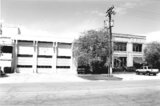
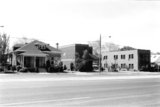
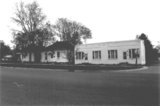
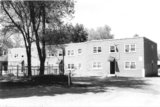
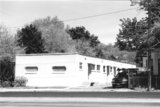
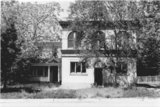
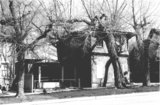
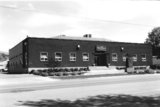
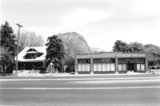
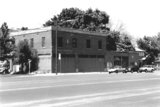
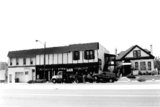
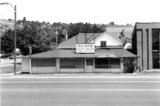
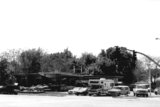
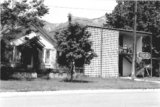
Show United States Department of the Interior National Park Service OMB No. 1024-0018, NPS Form National Register of Historic Places Continuation Sheet Section No. 8 Page H Capitol Hill Historic District (Boundary Increase), Salt Lake City, Salt Lake County, UT there is a sense of decline, because the railroads were no longer attracting new immigrants. Of the seven Norwegian families, all of whom had immigrated between 1907 and 1911, living in a boarding house at 250 West 400 North in 1920, only one man had railroad employment. The others were factory and service workers. The boarding house was owned and operated by Hans J. Christiansen (1848-1923), a Danish-born preacher, and his wife Inger M. Christiansen (1855-1934). Ethnically the residents of the boundary increase were a homogenous group in 1920. Most were born in Utah or other parts of the United States. Immigrants were all from Western Europe or Scandinavia with only a few exceptions. Peter Angeline (1884-?), a Greek-American, was a soda salesman who lived with his wife Elizabeth (1889-?) on 400 West. In large part, the neighborhood was filled the descendants of the original pioneer settlers. Wilford Morrison, son of Thomas H. and Susannah Morrison, ran the family bakery on 300 West and Reed Avenue. In 1920, Thomas A. Ball (1895-1986) was living with his wife, Mary E. Ryser (1900-1975), in the home of her parents at 520 Pugsley. He worked for the nearby oil refinery. Six years after the census he would move his young family to one of the Meadsbuilt bungalows at 624 North Pugsley. The boundary increase area does not appear to have experienced a precipitous economic decline during the depression years. The ever-present railroad and increasing automobile traffic in the area may account for some stability. A number of automobile related jobs were found in the 1920 census. There were four repairmen, two salesman, and a dozen truck drivers, mostly for the laundry and candy company. A handful of interesting buildings were constructed in the 1930s. Gray Motor Company building at 404 North 300 West was constructed in 1931 and used for both sales and repairs. The Jo-Beth Apartment building on Ardmore Place was built in the mid-1930s. Grace E. Nielsen (1886-1960), daughter of Hans and Josephine Nielsen, built a modern-looking concrete block double house on her family's property at 370-374 West in 1938. Four motel courts were built on 300 West between the 1920s and the 1940s. The most interesting of these is the concrete block Art Moderne structure at 326 North (later converted to apartments and currently covered with stucco). Of the small number of buildings constructed in the area during the 1940s, the most notable were the four minimal-traditional houses built between 363 and 377 West 700 North, built before World War II. The first occupants of these houses were a street department worker, an electrician, a driver and a clerk. A row of frame and shingle duplexes on Pugsley Street built in 1951 by the Robert .B Nowell Building Supply Company represent the post-war period. Unfortunately, only one of these duplexes, 578-582 North Pugsley, has escaped demolition. By the mid-century mark, commercial development in the area had begun to rise and was more intrusive in the neighborhood. In contrast to the Model Steam Laundry, when the Graybar Electric Company (wholesale electric suppliers) built at 360 North 400 West in 1948, four residential units were demolished to make way for the plant and its accompanying rail siding. The Graybar building was constructed of concrete block and face brick with a rail dock along the south elevation and automobile bay doors to the north. One of the biggest deterrents to residential construction and impetus for commercial development was the busy 300 West street. Ironically, even as automobile traffic was increasing, the 300 West corridor was one of the last streetcar lines to cease operation in |