| OCR Text |
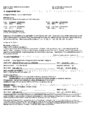
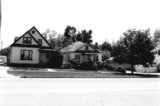
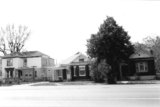
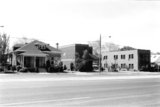
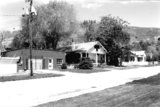
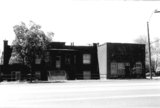
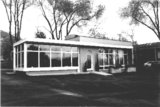
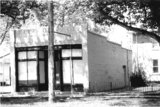
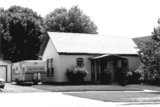
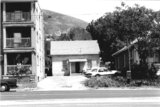
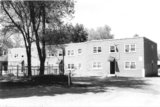
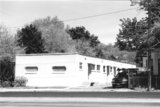
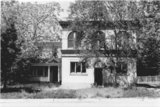
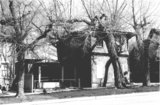
Show United States Department of the Interior National Park Service 0MB No. 1024-0018, NPS Form National Register of Historic Places Continuation Sheet Section No. 8 Page 10 Capitol Hill Historic District (Boundary Increase), Salt Lake City, Salt Lake County, UT on one of the few parcels of undeveloped land in the neighborhood and blended with its residential neighbors. Even after three years, when an addition was deemed necessary, the deep lot allowed the building to be easily expanded to the rear. Most of the area's commercial development occurred along 300 West, primarily in the form of retail stores. The D & D Drug Company built a two-story brick building at 401 North 300 West in 1911 adjoining an older grocery store. The one-part block, brick building at 426 North 300 West built in 1926 was originally a Safeway Market. After 1940 it belonged to the chain of O. P. Skaggs drug stores. The owner of 564 North 300 West built a grocery and fruit stand in front of his circa 1890 house in 1924. The earliest sign of the automobile in the area was the construction of a 1915 service station at 784 North 300 West (it was replaced in 1955, and the building now used as an office is still standing). The 1920 census enumeration indicates that the proportion of rental units in the Capitol Hill neighborhoods had increased, outnumbering owner occupied households by a margin of not quite 2 to 1. However, the neighborhood was relatively stable. Two-thirds of homeowners in the census stated they owned their house free and clear of mortgages. New housing stock in this period followed the traditional types throughout Salt Lake City, and the development pattern was one of infill. Singlefamily brick bungalows and period cottages are scattered throughout the boundary increase area. Some were built for family members on subdivided lots. A few longtime residents razed older homes to build new ones. Niels Peter Sorensen (1868-1947) and his wife Mary Ann Thain (1864-1940) tore down a nineteenth-century house at 674 North 300 West and built a brick period cottage in 1929. Sorensen was an engineer for the Oregon Short Line Railroad. Their daughter Naomi, a schoolteacher, lived in the home until her death in 1989. The majority of contributing garages were built in the 1920s, either with new construction or behind existing homes. Speculative tract housing was more prevalent during this decade than at any other time in the boundary increase neighborhoods. Local builders active in the area include Rudger Amundsen (1885-1952), who built three Arts & Crafts bungalows in 1913 on 600 North (262 and 264 West are still extant, 268 was demolished in the 1960s). Ammon S. Brown (1880-1968), a local contractor, lived for three years in one of the bungalows he built on 300 West between 348 and 358 North. These bungalows were built in 1926 and have period cottage details. Herbert and Frank Meads constructed six modest bungalows on the 600 block of Pugsley in 1924. The two brothers, along with their father Arthur Meads, were perhaps the most prolific contractors on Salt Lake City's west side. Several double house bungalows were also constructed during this period. The best examples are located at 265-267 West 400 North, 324-326 West 600 North, 263-265 West Bishop Place and 708-710 North 300 West, all built of brick in the 1920s. Several apartment complexes were also built during this period. The Lorna Apartments, a six-unit walkup located at 776 North 300 West and built in 1913, is one of the best preserved. The Hollandia Apartments, an eight-unit complex located at 376 North 300 West, was built in 1925. According to the 1920 census, the railroad was still the most important employer in the area. For example, all six households heads living in the Lorna Apartments worked for the railroads. However, |