| OCR Text |
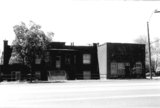
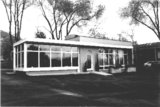
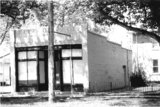
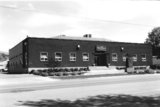
Show United States Department of the Interior National Park Service 0MB No. 1024-0018, NPS Form National Register of Historic Places Continuation Sheet Section No. 8 Page 9 Capitol Hill Historic District (Boundary Increase), Salt Lake City, Salt Lake County, UT three to four children per family. For the first time, the number of Utah-born residents in the area outnumbered the immigrants, the majority of which were still from Great Britain and Scandinavia. The year 1910 marked a turning point in the history of Salt Lake City and the Capitol Hill Historic District (Boundary Increase) area. The railroad industry was at its apex. The large and ornate, newly-constructed railroad terminals further south were only one manifestation of the industry's strength. The 1910 census enumeration lists occupations by industry, and by far the industry with the most representation is the railroad. Not only are there a large number of conductors, engineers, brakemen, switchmen, etc., the census also lists several car cleaners and repairers, stenographers, accountants, and mail clerks employed by the railroad and living in the increase area. The census also reveals fewer cottage industries and entrepreneurs. Most workers have moved into factory settings: the seamstress employed by the knitting works, the butcher in a slaughterhouse, the laundress working in a commercial laundry, and the laborer packing boxes at the candy company. While the commute from the Capitol Hill neighborhoods was always easy, the 1910 census shows a growing number of residents were service workers in downtown businesses. The census also suggests proportionately fewer new immigrants were living in the area. A large percentage of residents were second generation Utahans, although there continued to be new residents from the Midwest, some southern states, Scandinavia and Great Britain. As always there are a few small ethnic enclaves such as a contingent of Swedish men on 400 North and an extended Swiss family living on upper Pugsley. Commercial Development and Residential Infill. 1910-1951 In the early part of the twentieth century, Capitol Hill Historic District (Boundary Increase) was similar to most Salt Lake neighborhoods. The streets were lined with attractive homes, with shade trees in the front yards and gardens in the rear. Housing stock and residential makeup in the boundary increase and the original district were very similar. The main difference was topography. Although the boundary increase was less densely packed than the nearby Marmalade district, in 1910 the neighborhood was still primarily residential; but in the first half of the twentieth century the flat land and access to transportation routes encouraged vigorous commercial development. The 300 West corridor, always an important state road, became part of State Highway 89 and was completely paved for automobile traffic by 1921. The surrounding city streets were paved and some curb and gutter installed by 1926. The largest public investment in the neighborhood was the 1909 technical school (demolished in 1999) and the 1917 West High School building, which replaced the circa 1890s complex, located just south of the increase area. One of the earliest large-scale commercial ventures to take advantage of the area's amenities was the Model Steam Laundry Company. In 1912, the company moved from a downtown location to 244 West 300 North. The handsome two-story brick office and plant was designed by architect Fred Hale and built by J. F. Schraven at a cost of $18,000. Though the laundry plant was large, it was built |