| OCR Text |
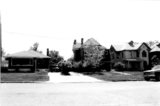
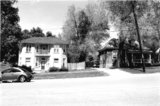
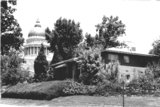
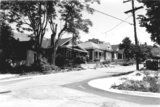
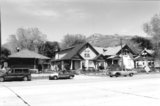
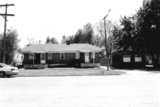
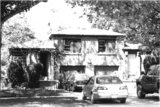
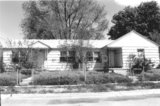
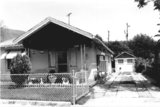
Show United States Department of the Interior National Park Service OMB No. 1024-0018, NPS Form National Register of Historic Places Continuation Sheet Section No. 8 Page 7 Capitol Hill Historic District (Boundary Increase), Salt Lake City, Salt Lake County, UT meant to mimic the homes the early settlers left behind in the east and mid-west. With the coming of the railroad, access to a variety of materials, and the availability of pattern books and handbooks, allowed local builders to produce exact replicas of Victorian cottages being built all across the United States. Ornamentation such as lathe-turned porch posts, spindle work and sometimes "gingerbread" cut woodwork was found on Victorian cottages throughout the district. In addition, many of the older homes were converted to cross wings or "dressed up" with Victorian ornamentation in the 1880s and 1890s. Probably the most interest example of this is the house at 236 West 400 North. Built of adobe in 1880 with what may have been an original mansard roof, this house was updated over the years with plaster and Victorian trim and fish-scale shingles. This house is also an early example of the semi-transient nature of the Capitol Hill neighborhoods. Between 1880 and 1890 six unrelated families lived at the address, indicating it may have been used as a boarding house. The house was purchased by Waldemar Lund (7-1899), a travel agent, and his wife Mary Ann Lund (1836-1901) and subsequently used as a single-family dwelling. Similar to the previous enumerations, the 1880 census lists a high number of boarders. Some were new immigrants staying with family and friends. Others were just traveling through the neighborhood. One example is B. Franklin Knowlton (1838-1901), who is listed with relatives and a hired hand at the family compound on 200 West (now demolished, built by his father, pioneer Sidney A. Knowlton [1792-1863]). Frank did not live in the area. He was a farmer, who managed the family farming and ranching interests in Farmington, to the north, and Skull Valley, to the southwest. Only a handful of occupant-farmers were in the area in 1880, and those were long time residents like William Hawk. The list of occupations grows considerably in 1880 census with a number of residents were employed by the railroad, and many with urban employment such as hotel porter, waitress, and typesetter. Another group worked in the local mills, breweries and general stores. Multiple-family housing began to appear in the district in the early 1890s. According to one report, in April of 1888, there was a "scarcity of rentable houses and a great demand for them," particularly four-room cottages for small families.22 This housing shortage may also account for the number of boarders. Robert Widdison (1844-1921), blacksmith, and his wife, Lois Thompson (1849-1901), built a Victorian brick house on Pugsley Court in 1894. After his wife's death, Widdison converted the house to a duplex, and it has remained a two-family dwelling since. The traditional double house accounts for almost one quarter of Victorian-era contributing buildings in the boundary increase area. Most are one-story, brick buildings. A few like the examples on 600 North resemble Victorian cottages with gable roofs and wood ornamentation. The more common type has a flat roof and a decorative brick parapet with a wood porch. Often the original owner of a double house was a builder or businessman who lived in one of the units. This is the case of the double house at 458-460 North 400 West, which was built circa 1902 by bricklayer, David A. E. Thompson (1863-1946). Thompson's sister and brother-in-law lived in the home for many years, as well as a number of renters, mostly railroad workers. Another example is at 337-339 West 700 North in 1903. The first occupant, James 22 Anderson, 88. |