| OCR Text |
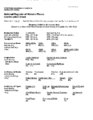
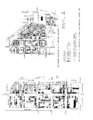
Show United States Department of the Interior National Park Service 0MB No. 1024-0018, NPS Form National Register of Historic Places Continuation Sheet Section No. 7 Page 1 Capitol Hill Historic District (Boundary Increase), Salt Lake City, Salt Lake County, UT Narrative Description The Capitol Hill Historic District (Boundary Increase) extends the original Capitol Hill Historic District ten square blocks to the west. This includes parts of five blocks and five full blocks for an area of approximately 60 acres. The increase area is part of the Capitol Hill residential neighborhood developed between the 1850s and the 1950s. The roughly rectangular-shaped area includes 306 primary buildings, of which 228 (75 percent) contribute to the historic character of the neighborhood. Of the 78 (25 percent) non-contributing buildings, 33 are altered historic buildings and 45 are considered out-of-period (see summary statistics at the end of Section 7). The increase area also includes 51 outbuildings, primarily garages, of which 33 (65 percent) are contributing and 18 (35 percent) are non-contributing. Counting primary buildings and outbuildings together brings the total to 357, of which 261, or 73 percent, are contributing. Seventy-one percent of the contributing buildings are single-family dwellings dating from the 1860s to the early 1950s. Sixteen percent of the contributing buildings are double houses/duplexes, mostly built between the 1890s and 1910. The housing stock also includes apartment buildings (four percent), hotel/motels (one percent), and residential courts. Contributing commercial buildings account for about seven percent of the total. The majority is located along 300 West, the area's main transportation corridor; however there are a few on the quieter streets, many with attached residential housing. The original Capitol Hill Historic District was listed on the National Register of Historic Places on May 5,1982. The increase area lies directly west of the current district, abutting the eastern boundary (see map). The Capitol Hill Historic District and the proposed boundary increase are just north and slightly west of Salt Lake City's downtown. The original district includes the neighborhoods known historically as the Marmalade District and Arsenal Hill, as well as the grounds of the Utah State Capitol, which was listed on the National Register on April 10,1978. There are four reasons for the proposed boundary increase. First, the eastern boundary of the original district cuts an irregular, somewhat arbitrary path through several blocks and, in at least one case, bisects a parcel. Second, the current National Register boundaries do not coincide with the boundaries of Salt Lake City's landmark designation for the Capitol Hill neighborhood. The city's boundaries extend farther west to include several properties on 300 West. Third, the original eastern boundary of the National Register district was drawn with the intent to include the neighborhood on the sloping west side of Capitol Hill and several properties at the base of the hill; however, historically the neighborhood (with its contemporaneous housing stock) extended several blocks west to the railroad tracks (approximately 500 West). The new boundary line will more accurately represent the 1 The city's boundaries will not be altered In conjunction with the National Register Increase, primarily because the city does not wish to increase the number of landmark designated buildings, which are potentially subject to design review. |