| OCR Text |
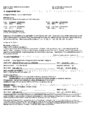
Show United States Department of the Interior National Park Service OMB No. 1024-0018, NPS Form National Register of Historic Places Continuation Sheet Section No. 8 Page 5 Capitol Hill Historic District (Boundary Increase), Salt Lake City, Salt Lake County, UT had laid seventeen sets of track (through lines and sidings) separating the west side of town from the east at 500 West and North Temple. The residents of the Capitol Hill area found their neighborhood conveniently close to the varied activities of the city. They found work in the business district of the central city and in a variety of nearby manufacturing and retail establishments. The largest businesses of the 1880s were located just west of the boundary increase area: the Utah Soap Manufacturing Works, the Salt Lake Glass Works, the Deseret Woolen Mills and the Morrison-Merrill Lumber Company. 20 Within the increase area were the Utah Brewery operated by the Margetts family, and three tanneries. One of the tanneries was owned by Phillip Pugsley (1822-1903), an early pioneer whose sphere of influence went far beyond his original small holding on 400 North. In addition to the Salt Lake tannery, he built a second tannery in Petersen, Utah, and was involved in an Ogden woolen mill. He is listed in the 1884 Salt Lake directory as a capitalist. In the mid-is/OS, Philip Pugsley established a flourmill on the corner of 300 West and 400 North (now demolished) that served the Capitol Hill community for many years as the place to bring wheat to be ground. Philip Pugsley had two wives, Martha Roach (1829-1906) and Clarissa Ames (1827-1910), and many of his descendants stayed in the area. His granddaughter Nellie Druce Pugsley (1893-1981) was a famous soloist with the Mormon Tabernacle Choir. Pugsley Street (originally Pugsley Court), which currently extends from Ouray Avenue to 700 North, is a tribute to his influence in the community. Most commercial ventures in the area were on a smaller scale, and many were near by or attached to the owner's residence. Christopher Stokes (1831-1911) acquired much of the land on Reed Avenue between 300 West and 400 West, which he originally called Rosella Street after his wife Rosella Nebeker (1845-1912). He took advantage of the traffic along 300 West to built a combination store and apartment complex at 775 North 300 West between 1894 and 1900. Stokes sold property to his neighbor Thomas Henry Morrison, (1847-1910), a New Zealander, who came to Salt Lake in 1882. Morrison built two brick homes for his wives, Emily Carbine (1856-1944) and Susannah Baker (18551921) on Reed Avenue in the 1890s. Behind the houses, Morrison and Sons built an ice-cream factory. His sons ran the factory while Thomas Morrison operated a restaurant in a downtown office building. His specialty was meat pies. The Morrison family later owned a bakery and a meat pie company; the latter is still in business today although no longer in the area. Most of the early commercial buildings were built at the north end of 300 West, no doubt because of the available land and the travelers entering and leaving the city. Besides the Stokes store, examples include the Godbe-Pitts Drug Company at 721 North 300 West (built in the 1880s, now altered), and the Frewin Grocery at 778 North (built in 1895, now demolished). Smaller general stores were built on the cross streets. Hans Peter Nielsen (1856-1920), a Danish immigrant, built a modest brick grocery and meat market at 376 North 400 West in 1900. The market must have been successful, 20 The first three have been demolished although the foundation of the Deseret Woolen Mills was visible for many years. The Morrison-Merrill Lumber Company's main building, built in 1909 at 205 North 400 West, was listed on the National Register in 1998. The 1911 mill building at 315 North 400 West has been substantially altered. |