| OCR Text |
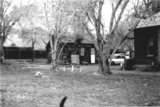
Show United States Department of the Interior National Park Service 0MB No. 1024-0018, NPS Form National Register of Historic Places Continuation Sheet Section No. 8 Page 2 Capitol Hill Historic District (Boundary Increase), Salt Lake City, Salt Lake County, UT constructed on each lot with a standard setback of twenty feet from the front of the property. The rear of the property was to be used for gardens and outbuildings. Farmland was provided in the outlying areas. Forty acres were set aside for the temple, and four other blocks were for public grounds to be laid out in various parts of the city. After the church officials selected lots for their personal use, the remainder of the land was divided by casting lots. Scarce resources such as timber and water were to be held in common with no private ownership.9 Within two years, the population of Salt Lake City had grown to 6,000. Plat B was laid out in sixty-three blocks to the east in 1848, and in 1849, the eighty-four blocks of Plat C were surveyed on the west side. The Capitol Hill Historic District (Boundary Increase) consists of portions of a ten-block rectangle at the northwest corner of Plat A, abutting the steep western slope of Capitol Hill. 10 In February of 1849, the city was divided into nineteen wards of the LDS Church and a bishop was selected to preside over each ward. 11 The increase area was along the eastern edge of the 19th ward (a triangle-shaped area extending from 300 North to the Beck's Hot Springs in North Salt Lake, and from 200 West (base of the foothills) to the Jordan River (approximately 1500 West)). 12 Though lots were allocated and the basic governing (church) hierarchy in place, early settlement proceeded slowly. Most of the earliest settlers spent their first few winters in crude log cabins, tents, or in wagon beds, in or near the fort (present day Pioneer Park at 300 South and 300 West). The church's official historian was "unable to find out positively whether any of the pioneers of Utah built houses or resided in the Nineteenth Ward prior to 1849, although it is possible that one of two families became settlers in 1848."13 William Hawk (1799-1883) typifies the pioneer of the period. Hawk was a member of the Mormon Battalion and arrived in Salt Lake in 1848. He was one of fifty-five settlers allocated a lot in the boundary increase area. According to family tradition, William Hawk built a log cabin within the fort and moved it to his lot sometime between 1850 and 1852. He was a farmer who later built an adobe house in front of the cabin. In 1906, his descendants demolished the adobe house, built a new brick house, and moved the cabin to the rear of the lot for use as an outbuilding. The cabin still sits at the rear of the property at 458 North 300 West, and was listed on the National Register of Historic Places in 1978. By the 1850s a number of settlers had moved to their lots and begun building permanent homes. Some of the houses may have been log (newly hewn or relocated from the fort site), but most were 9 Tullidge, 46-47. 10 The western boundary of the original Capitol Hill Historic District cuts an irregular path between 200 and 300 West, and it is difficult in early primary sources (such as the census) to determine which buildings or residents are in the Increase area and which are in the original district. For the purposes of this narrative history, the discussion will include the boundary increase neighborhood as well as some outlying areas. 11 A ward (or congregation) is the smallest ecclesiastical unit of the LDS church. 12 Daughters of Utah Pioneers, Tales of a Triumphant People: A History of Salt Lake County, Utah, 1847-1900, (Compiled and published by the Daughters of Utah Pioneers of Salt Lake County, Salt Lake City, Utah: Stevens & Wallis Press, 1947), 50 & 66. 13 Ibid., 51. |