| OCR Text |
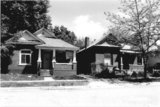
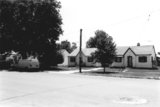
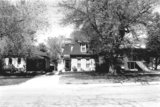
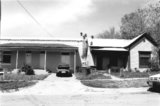
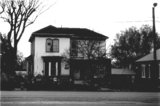
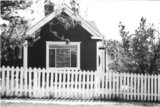
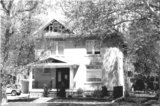
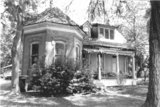
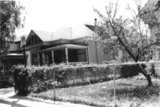
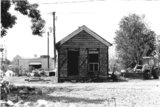
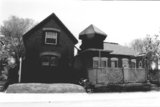
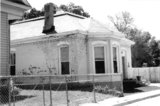
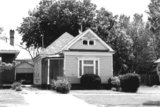
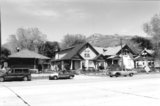
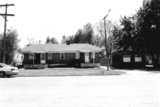
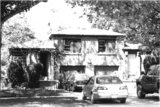
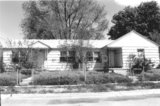
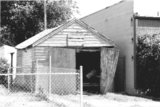
Show United States Department of the Interior National Park Service 0MB No. 1024-0018, NFS Form National Register of Historic Places Continuation Sheet Section No. 7 Page 7 Capitol Hill Historic District (Boundary Increase), Salt Lake City, Salt Lake County, UT demonstrate the transition from earlier houses and possess Classical, Italianate and Greek Revival features [Photograph 30]. The majority of Victorian houses built in the increase area were built between 1890 and 1910. Mostly modest brick cottages, these houses are found throughout the district as individual architectural entities. Though tracts of Victorian cottages appear throughout Salt Lake during this period, there are only rare examples of speculative building of single-family dwellings in the increase area. The twin homes on 400 North are a rare example [Photograph 17]. The Victorian-era homes in the district demonstrate the asymmetrical floor plans favored in the late nineteenth century. There are fifteen side-passage/entry homes, thirty-three cross wings, and thirty-six central-block-with-projecting-baystype homes [Photographs 9, 31-33]. In addition, there are four shotgun houses [Photograph 34]. Despite the presence of recognizable types, building in the area was highly individualized and many homes are difficult to classify. The house at 345 West Reed Avenue appears to be an unfinished cross wing, while its neighbor is an unusually small double house [Photograph 35]. The house at 333 Ouray Avenue is a hybrid of the side-passage and central-block-with-projecting-bays type [Photograph 36]. The size of Victorian homes in the district range from the just-over-500-square-foot shotguns to a few two-story, 2,000 square-foot plus dwellings, with the average house around 1000 square feet. While many houses have distinctive stylistic elements (e.g. Greek Revival cornice returns and Neoclassical columns), the majority of Victorian houses in the district would be considered Victorian Eclectic. Typical decorative elements include shingled gable trim, lathe-turned columns, and corbelled brick work. Unfortunately, historic photographs indicate that many homes have lost original wood ornamentation, particularly porch details such as balustrades and "gingerbread" spindle work. While most houses in the district would not be considered ornate, even modest homes range from the plain to the relatively elaborate [Photographs 34, 37]. The predominant material of the era was brick [Photographs 31-33, 35-36]. The very earliest homes may have been built with soft-fired brick over an adobe lining, however the majority of homes appear to be constructed of fairly good quality brick. Wood, as a structural material, occurs less frequently than brick, and was mostly found on modestsized homes. The majority of wood homes were frame with drop-novelty siding such as 321 West 400 North [Photograph 37]. Unfortunately a few have been covered with various veneers [Photograph 6]. A partially disassembled shotgun house illustrates the common practice of placing adobes between the studs of a frame house [Photograph 34]. Brick construction account for 75 percent of the contributing buildings, twenty-three percent of buildings are wood, with nineteen percent covered with various veneers. Other materials used include wood (used extensively for decorative elements), and stone (for foundations, sills, etc.). |