| OCR Text |
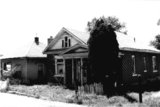
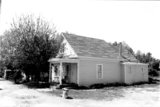
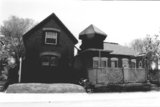
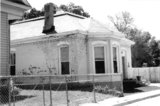
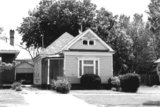
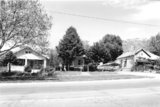
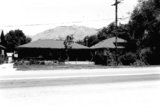
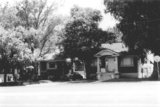
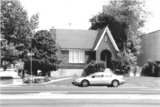
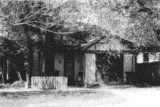
Show United States Department of the Interior National Park Service 0MB No. 1024-0018, NPS Form National Register of Historic Places Continuation Sheet Section No. 8 Page 3 Capitol Hill Historic District (Boundary Increase), Salt Lake City, Salt Lake County, UT built of adobe (or dried mud bricks). 14 An adobe pit was first established near the fort site in order to provide bricks for the fort wall. Most of these early adobe homes were single-story, one or two-room (single cell and hall-parlor) dwellings with classical symmetry and little ornamentation. Most were subsequently enlarged and covered with plaster or other veneers as soon as the owner had the necessary resources. A typical example is found at 365 West 800 North, an adobe hall-parlor occupied by Henricksens, a family of Danish marble and stonecutters. A more unusual example is a one-and-one-half story, double pile adobe house at 270 North Reed Street. This house was built in the early 1870s for George Washington Hill (1822-1891) and his wife, Cynthia Stewart Hill (18231908). George W. Hill was an Indian agent and interpreter, who published a phrase book for the Shoshone language in 1877. According to family tradition, Brigham Young frequently met Indian delegations in the Hills' home. George W. Hill's presence in the area was important because though the Mormon pioneer settlement had effectively driven the native population from the Salt Lake Valley, there were still encounters. Groups of Indians would camp in the foothills and occasionally beg for food from the residents. In 1862 a group of Indians was accused of stealing "forty sides of leather from the tannery of Mr. Pugsley, in the 19th Ward."15 Salt Lake City grew quickly in the two decades between 1847 and 1869, and has been described by many historians as an "instant city."16 The population increase was steady, supported by the annual influx of Mormon convert immigrants, mostly from England and Scandinavia, and the characteristically high Mormon birthrate. While the arid soil and necessity of irrigation systems made crop production difficult, the cash crop of gold dust left in Salt Lake City by "forty-niners" traveling to and from California gave rise to a thriving mercantile district in the center of town. The overall economy benefited by this traffic, and early Utah settlers gradually became more prosperous. The city was incorporated in 1851 with many lines of the original charter devoted to regulating burgeoning commerce. By the late 1860s, Salt Lake had several brickyards, and though small adobe houses were built up until the 1880s, brick became the most sought-after building material. The houses were surrounded by shade trees, which were usually lindens and poplars. The settlers dug irrigation ditches and built fences around their lots, planted gardens and small orchards, and raised whatever livestock was necessary for family subsistence. The early residents of Capitol Hill and vicinity had more difficulty in obtaining water for adequate irrigation than their counterparts on the valley floor. The hill's rocky soil made the area suitable for only family garden plots, one or two animals and a small orchard, such as those found in the Marmalade district. The 1850 census lists approximately 87 households in the area, with almost half listed as farmers. The rest were primarily artisans and laborers. Less desirable land and the easy walk to downtown 14 No log structures and only a handful of adobe houses were identified in the 1991 reconnaissance-level survey of the district, however many exist incorporated in later additions and alterations. Sanborn map coverage of the area begins (partially) in 1889 and by that time many of the early pioneer homes had already been demolished or altered. fe J. Cecil Alter, "The Mormons and the Indians," Utah Historical Quarterly, vol. 12, no. 1-2 (January-April 1944), 63. 16 Linda Sillitoe, A History of Salt Lake County, (Salt Lake City: Utah State Historical Society and the Salt Lake County Commission, 1996), 3. |