| Title |
Questions for the Bureau of Reclamation about the Central Utah Project, 1978-1979 |
| Description |
From the Dorothy Harvey papers (1902-2005), a collection of materials focusing on the Central Utah Project (CUP), a water resource development program to use Utah's alloted share of the Colorado River. Includes correspondence, Harvey's writing drafts and notes for an unpublished book on the CUP, federal documents, project litigation materials, subject files, news clippings, newsletters, programs, brochures, and maps. |
| Subject |
Central Utah Project; Strawberry Aqueduct; Rivers--Environmental aspects--Utah; Water resources development --Environmental aspects--Utah; Wildlife conservation--Utah; Ute Indians--Claims; Water-supply--Utah--Salt Lake County |
| Creator |
Harvey, Dorothy |
| Contributor |
Citizens for a Responsible Central Utah Project; Utah Water Resources Council; Heidenreich, Karl |
| Additional Information |
Includes: Procedures of the Bureau of Reclamation which raise questions of legality in developing the Central Utah Project (8 p., 1978); Questions presented verbally at Bureau of Reclamation hearing on the programmatic environmental impact statement on the Colorado River Storage Project: Vernal, Utah, October 11, 1977 (7 p.; 1977); Questions asked at hearings of the Bureau of Reclamation on the programmatic EIS on the Colorado River Storage Project; Questions for the Bureau of Reclamation, Meeting, Feb. 9, 1978, Salt Lake City (16 p.; 1978); Resume of Dorothy Harvey (1979); The Central Utah Project: is it necessary for Utah? (4 p.; 1978); Utah Water Resources Council letter of March 22, 1981; The Four Dangerous Myths About Utah & Its Water Problems, by Karl Heidenreich (2 p.; 1978) |
| Spatial Coverage |
Colorado River Basin (Colo.-Mexico); Duchesne River (Utah); Uinta Mountains (Utah); Rock Creek (Duchesne County, Utah); Jordanelle Reservoir (Utah); Strawberry Reservoir (Utah); Utah Lake (Utah); Salt Lake County (Utah); Duchesne County (Utah) |
| Collection Number and Name |
Accn2232 bx 58 fd 4; Dorothy Harvey papers |
| Rights Management |
Digital Image Copyright 2009, University of Utah. All Rights Reserved. |
| Holding Institution |
J. Willard Marriott Library, University of Utah |
| Date |
1977; 1978; 1979; 1981 |
| Digitization Specifications |
Original scanned on Epson Expression 10000 XL and saved as 400 ppi TIFF. Display image generated by CONTENTdm. |
| Publisher |
Digitized by J. Willard Marriott Library, University of Utah |
| Original Source |
1978 |
| Type |
Text |
| ARK |
ark:/87278/s6h41qcj |
| Setname |
wwdl_neh |
| ID |
1149488 |
| Reference URL |
https://collections.lib.utah.edu/ark:/87278/s6h41qcj |
| Title |
Page 42 |
| Setname |
wwdl_neh |
| ID |
1149477 |
| OCR Text |
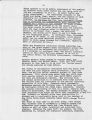
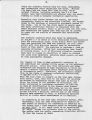
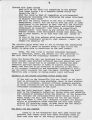
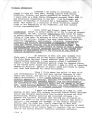
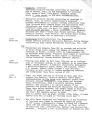
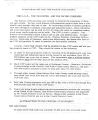
Show to agriculture and rural Utah would be much greater. THE C. U. P., THE TAX PAYER, AND THE WATER CONSUMER The Bureau of Reclamation was formed to promote the expansion of Western agriculture. By law, each Bureau of Reclamation project must have a cost benefit ratio greater than one to one. An increasing number of Bureau projects have been designed to produce municipal and industrial wate r . Since industrial and municipal water can be sold at 10 to 20 times the price of irrigation water, much more costly projects can be built. The CUP is such a project. The Bureau of Reclamation claims it has a one to one cost benefit ratio. An independent analysis of the CUP made by Dr. Thomas Powers, Professor of Economics, University of Montana, shows that objectively, the Bonneville Unit of the CUP will produce 32 cents in benefits for each dollar invested. Locally, many Utah citizens will be required to buy CUP water and are paying property taxes to CUP. They should be aware of the following: 1) In order to sell agricultural water to farmers 10 to 20 dollars per acre foot, municipal and industrial users will be forced to pay anywhere from 125 to 200 dollars per acre foot of water. This represents over a million dollars subsidy to each full service farm in the project area. 2) Much CUP water will be taken out of Duchesne County. However, Duchesne County belongs to the Central Utah Water Conservancy District, and pays 350, 000 dollars annually in taxes to help give away it's own water. 3) Through other means (listed below) Salt Lake County could develop water that would cost much less than the 125 to 200 dollars per acre foot that the CUP will cost. . . . • . - . - 4) Salt Lake County taxpayers will pay 60% of the cost of CUP even though they will receive only 20% of the CUP water. 5) Taxes are being levied without elected representation because the members of the Board of the Central Utah Water Conservancy District are appointed by the Fourth District Court in Provo. Many of the counties in the Water Conservancy District are not in the Fourth District Court. a ; . -i•:•""> a a r ••" -• A " _ ALTERNATIVES TO THE CENTRAL UTAH PROJECT • . • Salt Lake County: As noted above Salt Lake has available 40, 000 acre feet of ground water |
| Reference URL |
https://collections.lib.utah.edu/ark:/87278/s6h41qcj/1149477 |