| OCR Text |
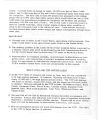
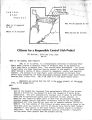
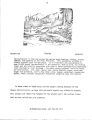
Show „4- In damming Rock Creek Canyon, and creating a reservoir in this narrow and confined declivity, there will be no opportunity at this site to provide for recreation camping and boating activity around the reservoir. Some type trail will have to be constructed on the canyon walls above the reservoir for the hiking and horse riding recreationist heading into the high country wilderness. The reservoir below him will have already claimed productive habitat and isolation for many wildlife species he is coming in to see or catch. The improved gravel road, recently constructed to serve the construction and maintenance of the Upper and Lower Stillxvater Diversion Complex, is already changing the primitive type character of this region of the Uinta Range which has long been cherished by the populace using it. Rock Creek is an outstanding mountain stream for fishing, as is its tributary, the South Fork. Cutthroat, brook, rainbow, brown and other game fish find highly adequate riffle to pool ratio in the stream bed throughout its length. Once the Upper and Lower Stillwater Dams are constructed on Rock Creek, and the guaranteed flow provided the Lower Stillwater Reservoir, the expected 2.8 fps water release from the Upper Stillwater Dam will not sustain a fishery in the 3-H mile stretch between these two dams. Since the South Fork Rock Creek is to be diverted, also, Into the supply of the transbasin diversion to the Wasatch Front, it too will be lost as are many other tributary spawning streams in this Central Utah Project. In Utah, these high quality mountain streams are a rarity, except on the Uinta Range, and they need to be treasured. Instead, in the area of Rock Creek, and west and south of it, and in only the first of the Central Utah Projects being implemented on the South Slopes, already Hades Creek is lost as a fishery, all of the upper Duchesne River is lost, and with the completion of this Bonneville Unit, all of Wolf Creek, all of the West Fork of the Duchesne and the Strawberry River will be lost as excellent fishing streams. This is in direct conflict with management requirements of the Forest Service (and the BLM) to sustain wildlife aquatic environment as well as terrestrial habitat. It is in contradiction to the fact that 40% of Utah residents purchase fishing and hunting licences and bring into the State of Utah coffers, annually, some $152,000,000 annually from this type recreation and its resources! Wildlife is a renewable resource, only so long as the habitat remains. In every planned damsite, reservoir, canal, or reduction of stream flow or elimination of spawning tributary stream, there is loss of wildlife - existing species and populations as well as the potential maintenance of these. All this |