| Title |
Questions for the Bureau of Reclamation about the Central Utah Project, 1978-1979 |
| Description |
From the Dorothy Harvey papers (1902-2005), a collection of materials focusing on the Central Utah Project (CUP), a water resource development program to use Utah's alloted share of the Colorado River. Includes correspondence, Harvey's writing drafts and notes for an unpublished book on the CUP, federal documents, project litigation materials, subject files, news clippings, newsletters, programs, brochures, and maps. |
| Subject |
Central Utah Project; Strawberry Aqueduct; Rivers--Environmental aspects--Utah; Water resources development --Environmental aspects--Utah; Wildlife conservation--Utah; Ute Indians--Claims; Water-supply--Utah--Salt Lake County |
| Creator |
Harvey, Dorothy |
| Contributor |
Citizens for a Responsible Central Utah Project; Utah Water Resources Council; Heidenreich, Karl |
| Additional Information |
Includes: Procedures of the Bureau of Reclamation which raise questions of legality in developing the Central Utah Project (8 p., 1978); Questions presented verbally at Bureau of Reclamation hearing on the programmatic environmental impact statement on the Colorado River Storage Project: Vernal, Utah, October 11, 1977 (7 p.; 1977); Questions asked at hearings of the Bureau of Reclamation on the programmatic EIS on the Colorado River Storage Project; Questions for the Bureau of Reclamation, Meeting, Feb. 9, 1978, Salt Lake City (16 p.; 1978); Resume of Dorothy Harvey (1979); The Central Utah Project: is it necessary for Utah? (4 p.; 1978); Utah Water Resources Council letter of March 22, 1981; The Four Dangerous Myths About Utah & Its Water Problems, by Karl Heidenreich (2 p.; 1978) |
| Spatial Coverage |
Colorado River Basin (Colo.-Mexico); Duchesne River (Utah); Uinta Mountains (Utah); Rock Creek (Duchesne County, Utah); Jordanelle Reservoir (Utah); Strawberry Reservoir (Utah); Utah Lake (Utah); Salt Lake County (Utah); Duchesne County (Utah) |
| Collection Number and Name |
Accn2232 bx 58 fd 4; Dorothy Harvey papers |
| Rights Management |
Digital Image Copyright 2009, University of Utah. All Rights Reserved. |
| Holding Institution |
J. Willard Marriott Library, University of Utah |
| Date |
1977; 1978; 1979; 1981 |
| Digitization Specifications |
Original scanned on Epson Expression 10000 XL and saved as 400 ppi TIFF. Display image generated by CONTENTdm. |
| Publisher |
Digitized by J. Willard Marriott Library, University of Utah |
| Original Source |
1978 |
| Type |
Text |
| ARK |
ark:/87278/s6h41qcj |
| Setname |
wwdl_neh |
| ID |
1149488 |
| Reference URL |
https://collections.lib.utah.edu/ark:/87278/s6h41qcj |
| Title |
Page 3 |
| Setname |
wwdl_neh |
| ID |
1149438 |
| OCR Text |
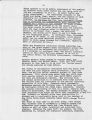
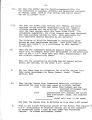
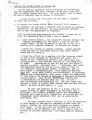
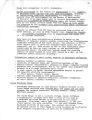
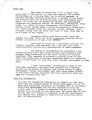
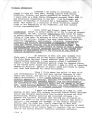
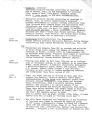
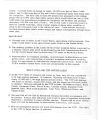
Show 3. f. If the Bonneville Unit is still justified on the basis of developing irrigation water, and part of this from saving evaporating water by diking Provo and Goshen Bays as an exchange for water for irrigating lands areound the Jordanelle Reservoir (really a paper exchange of water rights) what is the rationale for selling off water rights to already irrigated and irrigatable lands? What is the rationale for inundating already good farm lands under a Jordanelle Reservoir? What is gained by selling off water rights to farmable lands around Utah Lake and recovering farm lands from the diked Provo Bay which then has to be managed extensively by a costly drainage program? The Jordanelle- Provo River System being separated from the Bonneville Unit for purposes of EIS comment. 2. The Bureau of Reclamation has consistently maintained that the Bonneville Unit of the CUP, while made up of 6 systems, is one complete unit. It has maintained that the diking of Provo and Goshen Bays on Utah Lake is a necessary part of the Jordanelle-Provo River 1$ & I System since the water "saved" by evaporation permits water on the Provo River to be utilized for irrigation around the Jordanelle Reservoir. While 8,000 a f of water is to be released into Utah Lake from the Strawberry Collection System, no actual water is released then up into the Jordanelle-Provo River System. But the "saving" of 105,000 a f of water from reducing the size of Utah Lake, by diking, is a necessary planning part of the water then reserved in the proposed Jordanelle Reservoir for both irrigation around the Jordanelle and for transport to Salt Lake County for M & I use* Physically, there is no connection between the two Systems: they are tied together in the Bonneville Unit for purposes of economic justification and for coming up with a "viable" cost/ " benefit ratio. HOWEVER, the Bureau is now preparing an EIS (draft) on the Jordanelle- Provo River M & I System and is excluding the diking of Utah Lake. This is considered to be another and separate System for purposes of EIS preparation. At a meeting in early September in Salt Lake City with Bureau of Reclamation staff people - Harold Sersland and Debra Linke - their defense of this procedure was that the Sierra Club/NRDC versus Stamm suit of 197^ directed that the remaining systems in the Bonneville Unit have such EIS preparations made. The Bonneville Unit EIS was considered essentially a statement on the Strawberry Collection System. ((1) Starvation Collection System, (2) Stran'berry Collection System, (30 Diamond Fork Power System, (4) Irrigation and Drainage System, (5) Municipal and Industrial Water System, (6) Bureau of Indian Affairs Activity.) |
| Reference URL |
https://collections.lib.utah.edu/ark:/87278/s6h41qcj/1149438 |