| OCR Text |
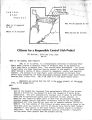
Show -2- Tied in with this recreation enjoyment, is a concern for habitat protection for Threatened and Endangered flora and fauna, and native species. (The Uintas; all warm water rivers harboring habitat-adapted fish species,as well as a native cold-water species north of the North Slope of the Uintas on Little West Fork Blacks Fork; The Book Cliffs) Water committments have been made to Indian tribes living in this region, south of and adjacent to the Uinta Range. These have been based on agricultural needs. Yet grazing, fishing and hunting - in part as a charged recreation to non-Indians, and potential mineral development on Indian lands,are and will be dominant livelihoods of the tribe. Diversion of water from four major rivers whose source is on the Uinta Range, has already taken place. (The Bear, the Weber, the Provo and the Duchesne). Work has commenced on diverting the next, westernmost Uinta Range river, the Rock Creek to the Wasatch Front. A tunnel is some 2,000 feet into the mountain; the layout is placed for the Upper Stillwater Dam and Reservoir even though recommendations have been made for a smaller, diversion dam. Three to four miles below this dam, the Lower Stillwater Dam and Reservoir, in Rock Creek Valley, on Indian lands, is planned. This Lower Dam/Reservoir is planned as a "compensation" for water being diverted out of Rock Creek to the Wasatch Front. In an attempt to now accommodate not only the Wasatch Front, which is rapidly growing, but northeast Utah, which is rapidly growing, and to comply with water supply for Indian agricultural purposes - even though these may be being replaced for other needs - the Bureau of Reclamation has developed a "domino theory" plan of sequentially replacing water lost in one stream drainage from its neighbor stream drainage to the east, from every existing wild mountain stream on the South Slopes of the Uinta Range. Dams, reservoirs, diversion feeder and service canals, and tunnels are planned to accomplish this goal. All major rivers and many tributary spawning streams will be involved. ( Rock Creek, Lake Fork, the Yellowstone River, the Uinta River, Whiterocks River. On the east, Ashley Creek and Big Brush Creek have already been dammed. In one plan, early spring flows on the Yellowstone River are to be transferred, via the Taskeech Feeder Canal, from the Yellowstone River across eight miles of deer and elk range, to be stored over the summer in Taskeech Reservoir in Lake Fork River, and to be transferred back again into the Yellowstone River via the Taskeech Service Canaliin late fall.) As should be apparent, meeting current and future water demands and finding methods acceptable for the outstanding recreation and wildlife resource protection, will require .a review of the outmoded CUP concept. |