| OCR Text |
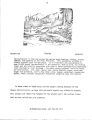
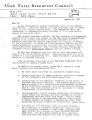
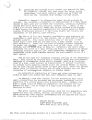
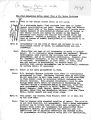
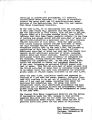
Show 5. There appears to be no public assessment of the quality of farmland whose water rights are now being sold to IPP and presumably to UP & L. As water rights are being transferred for industrial purposes in the Nephi and Delta, Utah, region, and the Quality of land remaining for irrigation purposes is not publicly assessed, by the time the Utah Lake Irrigation System EIS is presented for public input, what options for- comment will remain to this public? If lands already irrigated can be presumed to be the better soils and water rights to these lands are sold for industry will the same situation exist in southwest Utah as exists in northeast Utah - where, for political reasons, the Bureau won't press to put 6 W lands out of its irrigation plans, in northeast Utah, thousands of acres of 6W lands, if not irrigated, could permit water use for more important purposes, i.e., leaving water in Uinta Range streams for fisheries. (Specific data is available on this.) ^ While the Strawberry Collection System indicates how much of the Uinta streams water transported across the mountains will be delivered for irrigation and for M & I purposes to southwest Utah, the actual implementation of this water delivery appears to be out of the public hands, its ultimate consequences, undeterminable. Farmers wanting water rights to convert good, dry farming lands, are denied water. Good, dry farm lands adjacent to Utah Lake is to be sold for "borrow areas" for diking purposes at high prices. The Bureau of Reclamation contracted with the State Fish and Game and with Brigham Young University, for a two year, one million dollar research project of Utah Lake resources. This unique warm water lake may still have fish species endemic to that lake which would qualify for Rare and Endangered species. The littoral zone and sponge production in it combined with winds across the shallow lake all contribute to the natural cleansing properties of this Lake. Research would presumably determine whether the littoral zone in Goshen Bay could be duplicated within the diked lake, somewhere. However, the natural functioning of wind on a broad, shallow lake would be eliminated. The Bureau proposes to replace tU &*s lost resources with areas for white bass production in cct^l ^Jx. and, inasmuch as natural white bass productivity is already and is continually being lost in the reaches of the Provo River>where spawning takes place, tKnv^ A-***--^ The value of Utah Lake is put down today, even though this valuable Lake is continually a dumping ground for silt&tation from grazed lands and from Diamond Fork Canyon as well as other industrial and municipal discharges. Dredging the Lake isn't the answer, nor even deepening it, because the siltation continues, unabated. |