| Title |
Questions for the Bureau of Reclamation about the Central Utah Project, 1978-1979 |
| Description |
From the Dorothy Harvey papers (1902-2005), a collection of materials focusing on the Central Utah Project (CUP), a water resource development program to use Utah's alloted share of the Colorado River. Includes correspondence, Harvey's writing drafts and notes for an unpublished book on the CUP, federal documents, project litigation materials, subject files, news clippings, newsletters, programs, brochures, and maps. |
| Subject |
Central Utah Project; Strawberry Aqueduct; Rivers--Environmental aspects--Utah; Water resources development --Environmental aspects--Utah; Wildlife conservation--Utah; Ute Indians--Claims; Water-supply--Utah--Salt Lake County |
| Creator |
Harvey, Dorothy |
| Contributor |
Citizens for a Responsible Central Utah Project; Utah Water Resources Council; Heidenreich, Karl |
| Additional Information |
Includes: Procedures of the Bureau of Reclamation which raise questions of legality in developing the Central Utah Project (8 p., 1978); Questions presented verbally at Bureau of Reclamation hearing on the programmatic environmental impact statement on the Colorado River Storage Project: Vernal, Utah, October 11, 1977 (7 p.; 1977); Questions asked at hearings of the Bureau of Reclamation on the programmatic EIS on the Colorado River Storage Project; Questions for the Bureau of Reclamation, Meeting, Feb. 9, 1978, Salt Lake City (16 p.; 1978); Resume of Dorothy Harvey (1979); The Central Utah Project: is it necessary for Utah? (4 p.; 1978); Utah Water Resources Council letter of March 22, 1981; The Four Dangerous Myths About Utah & Its Water Problems, by Karl Heidenreich (2 p.; 1978) |
| Spatial Coverage |
Colorado River Basin (Colo.-Mexico); Duchesne River (Utah); Uinta Mountains (Utah); Rock Creek (Duchesne County, Utah); Jordanelle Reservoir (Utah); Strawberry Reservoir (Utah); Utah Lake (Utah); Salt Lake County (Utah); Duchesne County (Utah) |
| Collection Number and Name |
Accn2232 bx 58 fd 4; Dorothy Harvey papers |
| Rights Management |
Digital Image Copyright 2009, University of Utah. All Rights Reserved. |
| Holding Institution |
J. Willard Marriott Library, University of Utah |
| Date |
1977; 1978; 1979; 1981 |
| Digitization Specifications |
Original scanned on Epson Expression 10000 XL and saved as 400 ppi TIFF. Display image generated by CONTENTdm. |
| Publisher |
Digitized by J. Willard Marriott Library, University of Utah |
| Original Source |
1978 |
| Type |
Text |
| ARK |
ark:/87278/s6h41qcj |
| Setname |
wwdl_neh |
| ID |
1149488 |
| Reference URL |
https://collections.lib.utah.edu/ark:/87278/s6h41qcj |
| Title |
Page 16 |
| Setname |
wwdl_neh |
| ID |
1149451 |
| OCR Text |
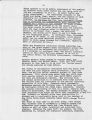
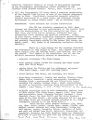
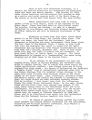
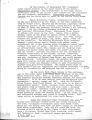
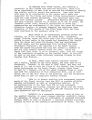
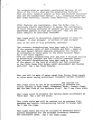
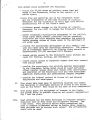
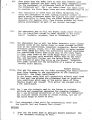
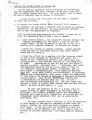
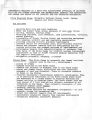
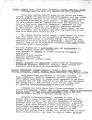
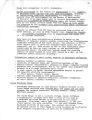
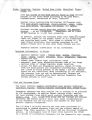
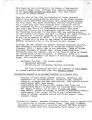
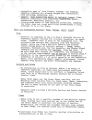
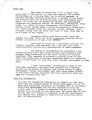
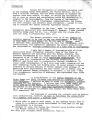
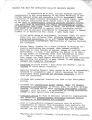
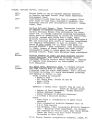
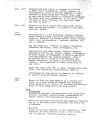
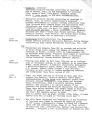
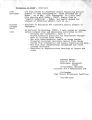
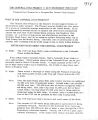
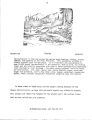
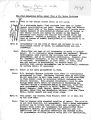
Show QUESTIONS ASKED AT HEARINGS OF THE BUREAU OF RECLAMATION ON THE PROGRAMMATIC EIS on the COLORADO RIVER STORAGE PROJECT 2. Will the Comprehensive'Environmental Statement fully address the problem of aquatic stream flow loss on the Uinta Basin streams resulting from the transbasin diversions under the Bonneville Unit? 3. Will means and measures to replace these aquatic flows under future project developments, be addressed in the CES? Will alternatives to water supply methods on the Uinta Range be explored? In the Uinta Basin - 4. existing and planned storage reservoirs have and will greatly reduce overbank flooding which creates and maintains floodplain wetlands and riparian wildlife habitat. Will this loss be fully addressed in the CES? Will the economics of the total wildlife resources and recreation use of these resources, as well as fur-bearing (trapping) economics, be incorporated into the evaluation? Will the expected wildlife and wildlife habitat losses and measures to mitigate such losses, be described fully in the CES?" (Habitat replaceability may not be possible today; other "available" habitat areas are already occupied at optimum levels - so added wildlife populations are eventually lost to the^available carrying capacity of the habitat. If dollar mitigation ^ is used, it must fully reflect the current resource economics which includes not only dollar • values for all wild life species but the willingness of people to pay to Have habitat areas available as well as their "willingness to sell" such areas.) 5. On the Uinta Range, will all future flow reductions resulting in loss of aquatic and riparian wildlife habitat be recognized in the CES? Will the means to minimize this be addressed? Will alternatives to water development which impact such wildlife habitat, be proposed? Will measures to "mitigate" all losses be defined and "mitigation" carried out by the Bureau? Will the public be informed, in the CES, that they not only must pay for water storage developments, which they may or may" not benefit from, but^they must bay the mitigation costs incurred for the loss of wildlife and its habitat which they might benefit from? 6. On the Uinta Range, large amounts of non-game habitat has been lost to reservoir inundation, in the past.' This loss will prevail in the future. This loss includes nesting and feeding areas for songbirds and raptors, for dens of small animals, for distinctive shore bird habitat. The wildlife produced from such habitat has value to the hiking and photographing recreationist. In the past, such habitat has been destroyed with no direct attempt to replace it. Will these habitat losses be adequately covered in the CES? Will measures to replace such loss be fully identified? Will the full economic, benefits to the recreation public be incorporated into the water developments proposed for such areas - as economic losses in the cost/benefit ratio? |
| Reference URL |
https://collections.lib.utah.edu/ark:/87278/s6h41qcj/1149451 |