| Title |
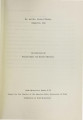
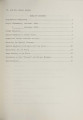
Spanish speaking peoples in Utah, oral histories: book 3, numbers 22 through 30 |
| Alternative Title |
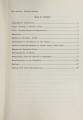
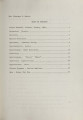
Mr. and Mrs. Richard Córdova, Dragerton, Utah: an interview by Vicente Mayer and Bernice Martínez [no date]; José Fidel Martínez, Midvale, Utah: an interview by Vicente Mayer and Bernice Martínez [June 8, 1972]; Mrs. Eduviges S. García, Salt Lake City, Utah: an interview by JoAnn Gallegos, Katarina Trujillo and Bernice Martínez, June 12, 1972; Clorinda Córdova, Salt Lake City, Utah: an interview by Bernice Martínez & Katarina Trujillo, June 13, 1972; Mr. and Mrs. Albert Robles, Dragerton, Utah: an interview by Margie Archuletta and Vince Mayer, June 14, 1972; José Marcos Olivas, San Luis [i.e., Old San Acacio], Colorado: an interview by John R. Tapia, August 12, 1973 [in Spanish]; Mike Meléndez, Salt Lake City, Utah: an interview by Kathy Trujillo and JoAnn Gallegos, June 15, 1972; Mrs. Bertha Amador Mayer, Bountiful, Utah: an interview by Margie Archuletta and Bernice Martínez, June 14, 1972 |
| Creator |
Córdova, Richard, 1935- ; Martínez, José Fidel, 1909- ; García, Mrs. Eduviges S., 1904- ; Córdova, Clorinda, 1935- ; Robles, Albert, 1906- ; Olivas, José Marcos, 1882- ; Meléndez, Mike, 1946- ; Amador Mayer, Bertha, 1912- |
| Contributor |
University of Utah. American West Center; Mayer, Vincent, 1944- ; Martínez, Bernice; Tapia, John Reyna; Gallegos, JoAnn; Trujillo, Katarina; Archuletta, Margie |
| Publisher |
Digitized by J. Willard Marriott Library, University of Utah |
| Date |
1972-06-08; 1972-06-12; 1972-06-13; 1972-06-14; 1972-06-15; 1973-08-12 |
| Date Digital |
2015-01-15 |
| Spatial Coverage |
Salt Lake City, Salt Lake County, Utah, United States, http://sws.geonames.org/5780993/ ; Dragerton, Carbon County, Utah, United States, http://sws.geonames.org/5538330/ ; East Carbon City, Carbon County, Utah, United States, http://sws.geonames.org/5538668/ ; Bountiful, Davis County, Utah, United States, http://sws.geonames.org/5771826/ ; San Acacio, Costilla County, Colorado, United States, http://sws.geonames.org/5437633/ |
| Subject |
Mexican Americans--Colorado--History; Mexican Americans--Colorado--Biography; Mexican Americans--Colorado--Social conditions; Mexican Americans--Utah--History; Mexican Americans--Utah--Biography; Mexican Americans--Utah--Social conditions; Chicano movement--Utah; Chicano movement--Colorado |
| Keywords |
Miners; Coal mines; Discrimination; Great Depression; Ethnic relations; Chicanos; Farm labor; Agricultural laborers; Railroad workers; Mexican Revolution; Mexican traditions; SOCIO; Catholic Church; Guradalupe Mission; Mexican American children--Education |
| Description |
Transcript of interviews held in 1972 and 1973 at Salt Lake City, Bountiful, Midvale, and Dragerton [East Carbon City], Utah, and Old San Acacio, Colorado with various Hispanic residents of Utah: Richard Córdova (b. 1935); José Fidel Martínez (b. 1909); Mrs. Eduviges S. García (b. 1904); Clorinda Córdova (b. 1935); Albert Robles (b. 1906); José Marcos Olivas (1882); Mike Meléndez (b. 1946); and Mrs. Bertha Amador Mayer (b. 1912). From: Spanish Speaking Peoples in Utah, oral histories, Interviews no. 22 - 30 |
| Type |
Text |
| Genre |
oral histories (literary works) |
| Format |
application/pdf |
| Language |
eng |
| Rights |
 |
| Relation |
For description of each interview, see: http://nwda.orbiscascade.org/ark:/80444/xv23580 |
| Scanning Technician |
Matt Wilkinson |
| Conversion Specifications |
Original scanned with Kirtas 2400 and saved as 400 ppi uncompressed TIFF. PDF generated by Adobe Acrobat Pro 10 for CONTENTdm display |
| ARK |
ark:/87278/s6cg1dtv |
| Topic |
Mexican Americans--Biography; Mexican Americans--Social conditions; Chicano movement |
| Setname |
uum_sspu |
| ID |
1039558 |
| Reference URL |
https://collections.lib.utah.edu/ark:/87278/s6cg1dtv |
| Title |
Page 170 |
| Format |
application/pdf |
| Setname |
uum_sspu |
| ID |
1039441 |
| OCR Text |
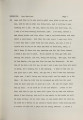
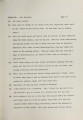
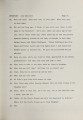
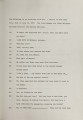
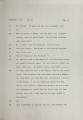
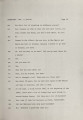
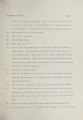
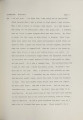
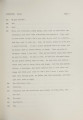
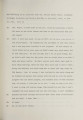
Show INTERVIEW: Helendez Page 18 NM: Juni r high was kind a different experience because I was very small still. Physically small. Everybody was still growing, were starting to grow and some people were continuing to grow and now was I not only the blackest, but the smallest. The girls were about a foot taller than I was at that time. I could tell that there were changes. Girls were putting on bras and all kinds of things like that and guys were growing hair all over their body and I about the ninty, ninty, probably abo.ut the seventy-five pound weakling that was still in class. I looked like a rail. In fact, I guess if I stood side ways and stuck out my tongue I would look like a zipper, or something. JG: A black on, huh? MM: Yeah, a black one at that. But my mother tried very, very hard I remember trying very, very to try and make me comfortable. She would say things are going to change and you are a very nice looking boy, and all these things. But it didn't really make any difference, because she is the only one that thought that, you know. Junior high, I guess, is the most traumatic time for most kids. It was for me because people are changing. People are starting to date. People are starting, instead of being children they are starting to become adults. They are going through puberty, you know maturation, the whole thing. I just was not participating in that because I wasn't growing. I sounds funny, but it was very traumatic for me. I was really worried, |
| Reference URL |
https://collections.lib.utah.edu/ark:/87278/s6cg1dtv/1039441 |