| OCR Text |
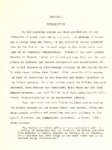
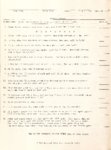
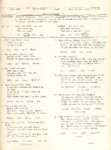
Show 12 Participation with one's neighbors in the education agencies of the community, other than the schools, such churches, Scouting, and 4-H clubs. 3. al as the 4. farticipation by adult members of the family in commUnity affairs such as voting, active member ship in service clubs, veterans organizations, farmers co operatives, etc., to mention a few. civic and A 5. reasonably good understanding of and proper diet and health practices " particularly cern the younger members of the family. 6. ance as for they con set of values which attaches import industry, thrift, punctuality, acquis competitiveness, and independence. Acceptance of to concern such traits itiveness, a as 1L• Anderson, Haskell M. Coombs, R. E. Kron, E. G. Collister and K. E. The Indian Child Goes to School. (Washington, D. C.: - - --.- Press, 1958), --p:-88-1' 2tMixed-Blood Members and Full-Blood Members of Ute of Uintah and Ouray Reservation, Utah,'" Federal Indian Tribe Resister, 21:66 3Anne (April 5, 1956), pp. 2209-2212. Anastasi and John P. Foley, Jr., Differential (New York: The Macmillan Company, (Rev. Edition) PSiCh01ogy, 19 9), 714. p. 468 Stat" -- 68B (August 27, 1954) P I'Ll' 671, The Ute Par tition Act. 5Darrel D. Atkinson, "Educational Adjustment of Ute Compared to Mixed Bloods and Native Whites at Union High School, Roosevelt, Utah.u (unpublished Master's Thesis, Utah State University, Logan, Utah, 1955), pp. 8-35. Indians as 6Anne Anastasi, Psychological Testing. Macmillan Company, 1957), p. (New York: The 256. 7Ibid. 8., p. 257. 9Ibid. 10Reginald (Ft. Duchesne, (Mimeographed. ) o. Utah: Curry, Ute "Annual Report (submitted 1959)" Council, 1959), p. 72. Tribal |