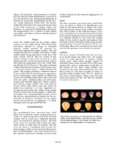
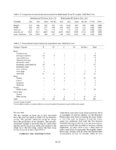
| OCR Text |
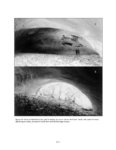
Show mostly low-rank plants and small game (rabbits and rodents), and the technology for processing those resources, most notably numerous grinding slabs and manos. Further research might eventually push the dating for an Archaic adaptation in the study area even earlier than 8000 cal. BC. At the upper end, we use the introduction of cultigens (chiefly corn) to mark the end of the Archaic, separately designating the preceramic interval when crops were initially used as the Archaic-Formative Transition. We readily acknowledge that the end of the Archaic is perhaps more subject to definitional debate than its inception (see discussion in Chapter 12 of Volume V). The adoption of Mexican domesticates by southwestern populations was a proverbial pandora's box, initiating a chain of unanticipated events or processes that could not be recalled. There are dramatic and unambiguous changes in the archaeological record on the Colorado Plateau that temporally coincide with (result from?) the appearance of domesticates. Concerning the Archaic foragers who did not incorporate domesticates into their subsistence strategy, Berry and Berry (1986:319) made a valid point when they argued that hunter-gatherers alongside farmers are not analyzable in the same terms as foragers alone. During the Archaic-Formative Transition there appears to be evidence for two distinct adaptations on the Rainbow Plateau: one a continuation (lingering) of traditional foraging behavior that can still be considered Archaic (or terminal Archaic) and another that is to a large extent based on farming, which we commonly refer to as Basketmaker II. HISTORY OF STUDY This is not the place for a detailed accounting of the history of archaeological study of the Archaic period within the Southwest generally, or even the Colorado Plateau specifically. Several authors have done this in recent years and interested readers are referred to Berry (1987), Berry and Berry (1986), Huckell (1996), Matson (1991), and Vierra (1994), among others. It will be useful, however, to provide a review of research within the Kayenta Anasazi region. The study of Archaic remains is basically a post World War II phenomenon, with most effort taking place after the late 1960s with the advent of contract archaeology. Prior to this, many researchers had speculated as to the predecessors of the first farmers, the Basketmakers, and Kidder (1927) left a stage open (Basketmaker I) to accommodate the remains of a purely hunting-gathering lifeway. Archaeologists had excavated many caves and shelters on the Colorado Plateau prior to the 1940s, but preagricultural materials underlying Basketmaker remains were not recognized in the main part of the Four Corners region until MNA's 1961 excavation of Sand Dune Cave (Lindsay et al. 1968). That no certain Archaic remains became known during earlier cave excavations in this region likely results from two factors. Coarse recovery techniques seem partially to blame. Most digging during the first half of the 1900s and earlier was oriented toward discovering cultural constructions such as storage cists and burial pits. Cave deposits seem to have been treated simply as a matrix for holding these features, and the remains recovered from this matrix were rarely differentiated stratigraphically, and then only on the gross basis of whether they were associated with pottery. The few Archaic remains that may have been recovered from non-feature aceramic contexts were lumped with those of the Basketmakers. Another likely reason that early cave excavations, such as those of Kidder and Guernsey, did not identify Archaic remains relates to the impact that farmers had on the shelters that they occupied. Basketmakers and Puebloans extensively excavated shelter deposits to create storage features and structures; this included digging storage pits into the Pleistocene hardpan common to many caves (e.g., White Dog). In so doing they often totally removed or greatly damaged Archaic deposits, leaving behind just small isolated intact remnants. Archaic remains seem best preserved in caves that occur well away from productive farmland (e.g., Cowboy Cave, Jennings 1980; Schroedl and Coulam 1994), that are poorly suited to intensive Basketmaker habitation (e.g., Old Man Cave, Geib and Davidson 1994), or where a thick non-cultural accumulation such as roof spall acted as a protective barrier between Basketmaker pit digging and Archaic deposits (e.g., Atlatl Rock Cave, reported in Chapter 2 of this volume). It also seems true that forager accumulations are better preserved in caves located north of the area where farming was most intensively practiced. Moreover, the often heavy overlay of Basketmaker or Puebloan architecture and trash on the southern Colorado Plateau makes it difficult for archaeologists to pursue an excavation to any great depth or horizontal extent so that the remnants of forager accumulations might be studied. For the Kayenta region and beyond, the first actual documentation of definite Archaic remains from stratigraphic context came in 1961 when J. Richard Ambler excavated Sand Dune Cave and tested Dust Devil Cave (Lindsay et al. 1968).2 This work was done as part of the Museum of Northern Arizona's 2 C. T. Hurst's (1943, 1944, 1945, 1947) excavations in western Colorado were some of the earliest that identified preBasketmaker (Archaic) remains on the Colorado Plateau. His research remains poorly known in part because it was II.1.2 |