| OCR Text |
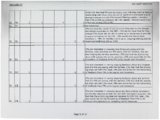
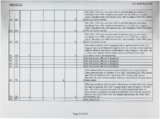
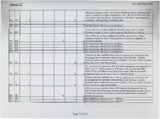
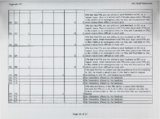
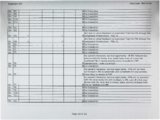
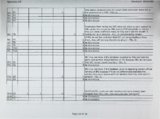
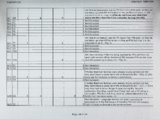
Show 4.6.2 The "I" in SWOT!, stands for the interactions between the elements of the SWOT! that make up the forces within and without the unit of analysis. Each strength (internal) is weighted against each corresponding opportunity and threat (external). Once a strength has been weighted against each of its corresponding external factors, the true value of that strength can be identified in the current state of the unit of analysis. Likewise, the same process is applied to each weakness. The objective of the SWOT! is to identify how to align one's strengths with gaining potential opportunities while counter-acting threats. The SWOTis in this evaluation employ a five-point scale from -2 to +2. Family Mentor Program SWOT!s 4.6.3 With the permission of all participants, the evaluator recorded each focus group and interview that was conducted. From the recordings, the evaluator created verbatim transcripts. These transcripts along with the survey data, were prepared and reviewed to identify strengths, weaknesses, opportunities, and threats of the Family Mentor Program. All recordings and transcriptions have remained confidential and will be destroyed by evaluator on completion of this evaluation. An interpretation team was created to confirm evaluator interpretation of the transcripts. Their feedback was received and discussed with the evaluator. The changes that the interpretation team suggested were incorporated into two SWOTis, one for the volunteers and another for IRC Staff. 4.6.4 The interpretation team consisted of three impartial individuals: Michael Atkisson, Alecia Finlinson, and Annalissa Rausch. Michael is an Instructional Design Lead with Allen Communication Leaming Services in Salt Lake City, UT. He has a MS in Instructional Systems Technology from the Indiana University. Alecia worked as a Performance Consultant and Vice President for a Bank of America branch in Richmond, Virginia. She has a BS in journalism and communications from Brigham Young University. Annalissa is a fellow student of the evaluator and member of her Service Leaming Scholarship committee. She is currently in her last semester of a BA in early child development at the University of Utah. 4.6.5 The SWOTis were then weighted according to a criteria developed by the evaluator. The criteria provides a standard by which to weight the interactions between the strengths, weaknesses, opportunities, and threats. First, the_interaction is identified. The evaluator must decide if the internal strengths I weaknesses, have the ability to take advantage of or overcome the external opportunities I threats respectively. Second, if the interaction is positive, the evaluator identifies if there is a desire, infrastructure, and I or execution on behalf of IRC or the mentor to leverage the opportunity or mitigate the threat. If none of the three exist, a Ois assigned. If one or two of the three exist, a +1 is assigned. If all three exist, a +2 is assigned. If the interaction is negative, the evaluator identifies what barriers exist. If one barrier exists, a -1 is assigned. If two or more barriers exist, a -2 is assigned. Some interactions are more complicated in that they have both positive and negative aspects. It is possible for interactions to cancel one another, partially or entirely. If there is not an interaction then the weight is left blank. Weighting of the interaction is based on the current state, not the potential state of the Family Mentor Program. 12 of 12 |