| OCR Text |
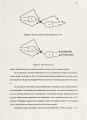
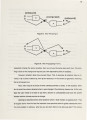
Show Figure 19: Example Constraint Kemel graph. graph we can deduce that a possible evaluation order is: 1. Propagate dependencies in 01 2. Propagate dependencies in 04 3. Satisfy constraints in C1 4. Propagate dependencies in 02 5. Propagate dependencies in 03 6. Satisfy constraints in C2 7. Propagate dependencies in 05 The global analysis Is unsatisfactory for two reasons. 1. The analysis is global. We should only concern ourselves with the affected parts of the graph. If only some part of 05 was changed, we don't care about 01, 02, 03, 04, C1 or C2. 2. Constraint satisfaction is unpredictable since we don't know ahead of time how the network will be satisfied. It is possible that no nodes attached to the dependency graph are affected by satisfaction. H that is the case then if we change 01, C1 might not modify any nodes contained in 02 or 03. H nothing in 02 depends on 01, we are done evaluating. If however, we do modify nodes in 02 or 03, then we rrust propagate the dependencies. 3.2.3 Outline Of A Local, One Pass Satisfaction Algorithm. 32 When a single object d is changed in 01, dependencies are propagated only to objects which are premises of the constraint network C1 . No dependencies are propagated to 02 since some object in C1 which 02 depends on may yet change. This phase is called con- |