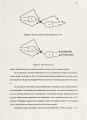
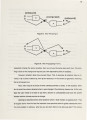
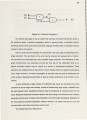
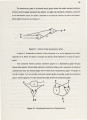
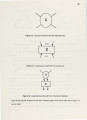
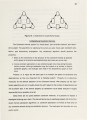
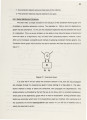
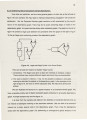
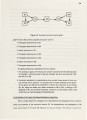
| OCR Text |
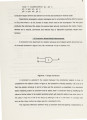
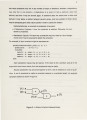
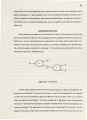
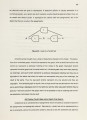
Show 9 1.6.1 Constraint Propagation. Constraint propagation or deduction can be summarized as: if you have enough information available to deduce a value in the oonstraint network, then do so. A value Is deduced by firing one of Its attached, unsatisfied constraints. In figure 3, after a Is set to 2, the constraint system may deduce either b :: 1 or c := 4. If b := 1 is deduced, then the network is satisfied. Otherwise the system must choose to deduce either d := 3 or e == 8 to satisfy the networ1<. The simplest method of constraint propagation is unplanned firing. If the system is presented with a set of alternative possible deductions, any one of them is selected at random and deduced. The system deduces values until no more deductions can be made. Planned propagation is more complex: prior to deducing any values, the system analyses some or all of the constraint networ1< to create a satisfaction plan. This plan is usually the set of assignments to be made and the order in which they should be made. The plan is executed to satisfy the constraint network. Planned firing is often desirable for several reasons: • The firing order is determinate and reproducible. • Heuristics can be used to try to satisfy the constraint system in some goodway. All the satisfaction systems described in this thesis use some form of planned propaga-tion. 1.6.2 Numerical Methods. Sometimes a constraint networ1< cannot be satisfied by propagation. An example is the constraint a * a = b in figure 4. If a is changed, the system has no problem producing the value of b. However, if b is changed the system cannot know how to deduce a without knowing about square roots. This is a kind of meta knowledge not contained in most systems (an exception is [4}). Most satisfaction systems re~rt to numerical relaxation in cases such as figure 4. Each unsatisfied constraint introduces error into the networ1<. Relaxation varies the values of the unsatisfied constraints in an attempt to minimize the total error. · Numerical methods are the slowest but most general satisfaction methods. Therefore, |