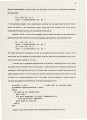
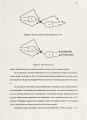
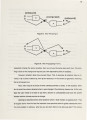
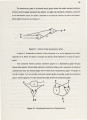
| OCR Text |
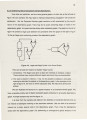
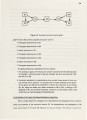
Show 22 ~~l : ___ --t.(-2~-d ~ + )-- e (6) Figure 10: Constraint Propagation. The second advantage is that a breadth first traversal will deted and identify cycles in the constraint graph. Constraint propagation cannot in general satisfy a constraint network containing cycles. Once cycles are found either subgraph transformation or relaxation may be invoked to satisfy the network. Once a cycle has been identified, the constraints in the cycle may be transformed into a single constraint. The constraints in the cycle may be rerooved and replaced with a functionally equivalent but computationally roore tractable single constraint. The mechanics of subgraph transformation are reasonably involved but they rely on the observation that an algebraic constraint network may be viewed as a system of simultaneous equations. These equations are combined into an equivalent but roore compact system of equations and placed into a single constraint. Constraint propagation is resumed once the cycle is transformed out of the network. Subgraph transformation is ideal for cycles containing a small number of con-straints. A cycle containing a large number of constraints may cause the resulting transformed constraint to be too large and unwieldy. Instead of transforming large cycles, relaxation may be used instead. Each unsatisfied constraint may be considered to introduce error into the cycle. Relaxation Iteratively evaluates values in the cycle trying to minimize the error. Iteration continues until the error is below some threshold or the error stops converging. Relaxation is # the most general constraint satisfaction method, however, it is slower than propagation and transformation, and it does not produce exact values. The notable features of Magritte are: |