| OCR Text |
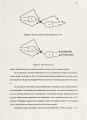
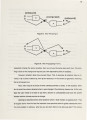
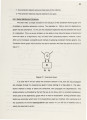
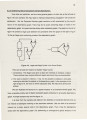
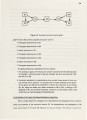
Show CHAPTER 1 INTRODUCTION 1.1 Modeling and Constraints This thesis describes the use of algebraic constraints and functional dependencies in the context of a geometric modeling system. The modeling system is assumed to have the property that complex, possibly procedural (as opposed to algebraic) geometry is functionally derived from elementary algebraic objects. An example of deriving complex geometry from elementary geometry is to derive a B-spline curve from two lines and tangency information. This thesis is based on the belief that people understand and manipulate geometric models in terms of elementary geometry, and that the modeling system should be responsible for deriving the more complex model from the user's simpler geometry. As a part of this kind of modeling system, a constraint satisfaction system would aid the user effectively if its emphasis were primarily on the elementary geometry of the users construction and secondarily on the complex geometry of the derived model. The model may be thought of as comprising groups or kernels of elementary geometric objects related by algebraic constraints. It is the task of the algebraic constraint system to maintain and satisfy these constraints. Connecting and enveloping these Constraint Kernels are the more complex geometry derived from the kernels. This surrounding geometry envelope depends on the Constraint Kernels in the sense that when one or more kernels are modified, some parts of the geometry envelope may need to be recomputed. Normally the same sequence of steps used to derive the model In the first place may be reused to recompute the envelope. The logical derivation remains the same but the geometric form of the model may change. Constraint Kernels is a hybrid scheme employing both algebraic constraint networks |