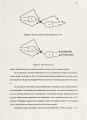
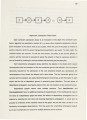
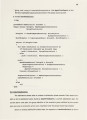
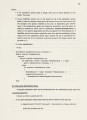
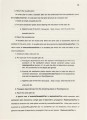
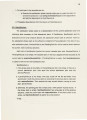
| OCR Text |
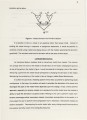
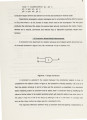
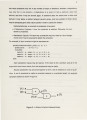
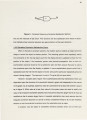
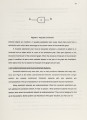
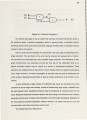
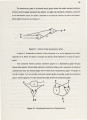
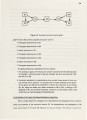
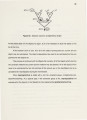
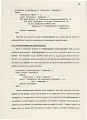
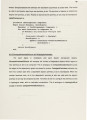
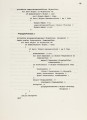
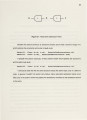
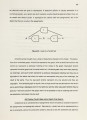
Show 2 with their associated constraint satisfaction algorithms, as well as dependency graphs with their associated dependency propagation algorithms. These Constraint Kernels can be embedded in an effective user interface allowing (but not requiring) considerable user input to the satisfaction process including Undo, and for underdetermined constraint networks a FirstSolution, NextSolution and PreviousSolution capability to step through the set of possible network solutions. 1.2 The Modeling System. The modeling system is assumed to have a rich class of geometry to draw from. The testbed system is the ALPHA_1 modeling system developed by the ALPHA_1 group at the University of Utah. ALPHA_1 supports B-spline curves and surfaces. A typical model begins with simple geometry such as points, lines, and planes. More complex geometry such as curves and surfaces are derived in a sequence of steps from the elementary geometry through functions called constructors. Thus the final model is related to the elementary geometry by applying a sequence of constructor functions. Interactive manipulation or tweaking of the model often consists of modifying some piece of elementary geometry and then recomputing (re-executing the derivation sequence of) all aspects of the model dependent upon the modified geometry. Frequently the actual derivation sequence may be changed. In this case a number of derivation steps may be deleted and new derivation steps added to the model. 1.2.1 Deriving A Model. There are certain primitive objects in the modeling system, which are not necessarily derived from other objects, such as numbers and strings. Primitive objects may be derived (numbers may be derived from arithmetic expressions for example) but they may also be specified directly by the modeler. Primitive objects comprise the roots of the model. A root of the model is a component of the model which is not derived from any other corr1)cment. All non-root objects in the model are derived from the root objects using constructor functions. A derivation of this kind is shown in figure 1. More COfT1llex models may be created and result in longer derivations. For example, a surface of revolution would require a curve, an axis of |