| OCR Text |
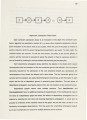
Show 13 the specification of relations which parts of the model rrust satisfy, and which cannot be represented by dependencies. Neither method of model maintenance is superior to the other for all requirements. Together, the two paradigms COrfl>lement each other. 1.8 Scope Of This Thesis. The purpose of this thesis is to develop of a set of model maintenance algorithms which allow the straightforward use of both dependency based and constraint based model maintenance mechanisms within a single geometric modeling system. These algorithms will allow the modeler to explore all of the possible solutions of the constraint system with firstSolution. nextSolution, previousSolution, and undoSolution capabilities. For situations such as point dragging, there is an ability to reuse solutions, avoiding any planning overhead. The thesis is not dependent upon a particular class of constraints or method of constraint satisfaction. However, the thesis was Implemented using algebraic constraints (4], and a new depth first constraint satisfaction algorithm based on Gosling's breadth first algorithm is presented. The algorithms are presented in the context of the ALPHA_1 geometric modeling system, which is an interactive, procedural modeling system with both textual and graphical intertaces. There are two criteria used to weigh the effectiveness of the satisfaction algorithms. They should be local in the sense that only the part of the model affected by a change should be examined and recomputed during the satisfaction process. They should also recompute affected values exactly once. These two criteria assure that a minimal amount of recomputation occurs during satisfaction. The net result is a set of algorithms which provide a modeling system with the utility of dependency base model maintenance and the power of constraint based model maintenance with an efficient satisfaction mechanism. |