| OCR Text |
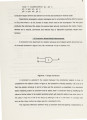
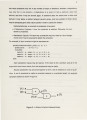
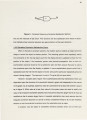
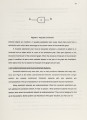
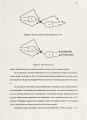
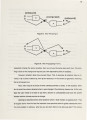
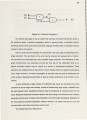
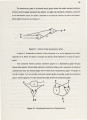
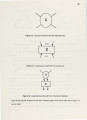
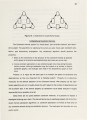
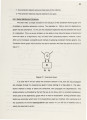
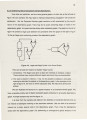
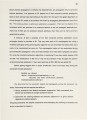
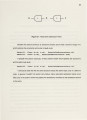
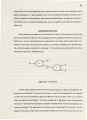
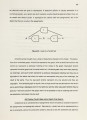
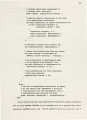
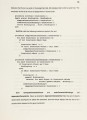
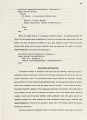
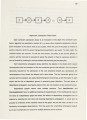
Show 10 ac:::::::c:J--b Figure 4: Constraint Requiring a Numerical Satisfaction Method. they are the methods of last resort. Their solutions are less satisfactory than those of deductive methods since numerical solutions are approximations of the exact solutions. 1.6.3 Reusable Constraint Satisfaction Plans. Often in interactive constraint systems, the modeler picks or selects an object and then drags or moves the object to another position. The modeling system must repeatedly satisfy the constraints on the moving object each time the display device is updated to show the new position of the object. If the constraint system uses planned propagation, then a naive implementation would be forced to find a satisfaction plan and then execute that plan to satisfy the constraints each time the display is updated. A more sophisticated system would find a satisfaction plan the first time the object is moved, and use the same plan repeatedly while the object is being dragged. This approach is used in Thinglab (3) with great effect. However, reusable plans require more sophisticated planning mechanisms which are dependent upon the structure of the constraint network's graph and independent of the values In the graph. As an example, assume a value a is constrained to be less than another value b as in figure 5. While value a ·is less than value b, the system does not need to modify the value of b to keep the constraint satisfied. But once point a becomes larger than b, b roost be modified so that it remains larger than a. A reusable satisfaction plan roost assume that the inequality constraint attached to a and b is atways unsatisfied whenever a orb are modified, whether or not the constraint is satisfied when the satisfaction plan is made. In practice very few types of constraints remained satisfied when one of their con- |