| OCR Text |
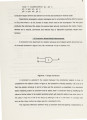
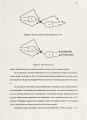
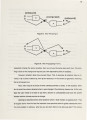
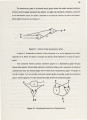
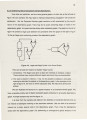
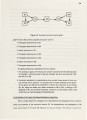
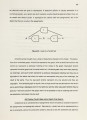
Show 30 1. Any constraint network occurs at most once In the ordering. 2. The constraint networ1<s may be satisfied in one pass. 3.2.1 Naive Satisfaction Schemes. We shall make a Sifll>le restriction to the structure of the Constraint Kernel graph and Investigate a possible satisfaction scheme. The restriction is: Only a root of a dependency graph may be constrained. To the user this restriction implies he may not constrain the resutt of a calculation. This is a severe limitation on his ability to fully utilize the power of constraints ' since the resutt of a dependency may not affect other constrained objects. However it does allow us to investigate a straightforward method of satisfying Constraint Kernels graphs. Any Constraint Kernel graph which satisfies the above restriction will have the general structure of figure 17. D Figure 17: Restricted Graph. It is clear that if we can satisfy the constraint network C first, then we may propagate any changes through the dependency graph D since nothing in D may affect C. The satisfaction method is simply to satisfy the constraints, then propagate the dependencies. This simple scheme is untroubled by the fact that we do not know, prior to constraint satisfaction, which parts of the dependency graph will be in need of recalculation. During constraint satisfaction we remember which roots of the dependency graph are modified. After satisfying all of the constraints we invoke topologlcaiEval (see section 4.1) on the list of modified roots to satisfy the dependency graph. |