| OCR Text |
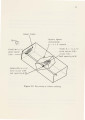
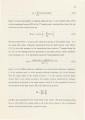
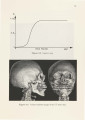
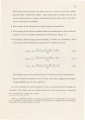
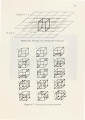
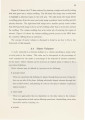
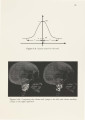
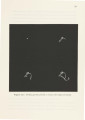
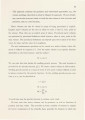
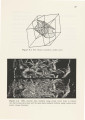
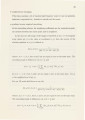
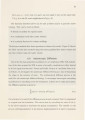
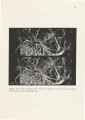
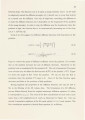
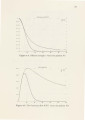
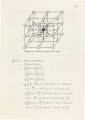
Show 33 iteration steps. The function u(x, t) is taken as image intensity I(x, t). As we want to adaptively control the diffusion strength, c(x, t) should vary in a way that it gives us a control over the diffusion. One way of adaptively controlling the diffusion is to make the diffusion function c(x, t) dependent on the magnitude of the gradient of the image intensity. In order to stop the diffusion near the boundaries where the gradient is high, the function has to be monotonically decreasing one of the form c(x, t) = f(l\7 I(x, t)l). Gerig et al. [12] suggest two different diffusion functions both dependent on the gradient: (4.2) (4.3) Figure 4.4 shows the graph of diffusion coefficient versus the gradient. It is evident that as the gradient increases the rate of diffusion decreases. Sensitivity to the gradient term is manipulated by the parameter K. The role of parameter K becomes more obvious once we define the flow function <I>(\7 I) as the product c * \7 I. Figure 4.5 shows the graph of flow versus the gradient. We can see that the flow is maximum when the gradient \7 I equal to K. Above K the flow function again decreases and halts at the positions of high gradients. Having explored the properties of the diffusion function, one can see how it fits in the filtering of the 3D volume data. The formulation of a 3D diffusion process follows directly from the original anisotropic diffusion equation 4.1 where x corresponds to (x, y, z). The total of the flow contributions at each node is now taken from a 3D neighborhood of voxels as illustrated in Figure 4.6. One can include 6 immediate nejghbors of the 26 voxels within 3 x 3 x 3 voxel window. The flow contribution equation is derived from equation 4.1 as follows. |