| OCR Text |
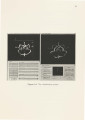
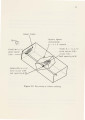
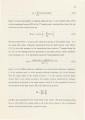
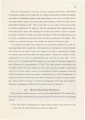
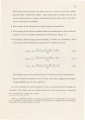
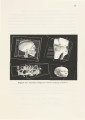
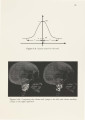
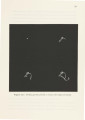
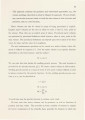
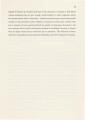
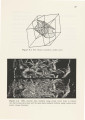
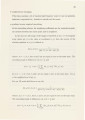
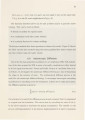
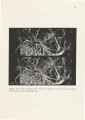
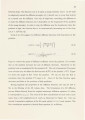
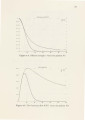
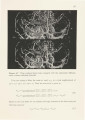
Show 19 3.3 Volume Seeds and Seedlings Volume seeds are used to focus on regions of interest within a volume. This leads us to a problem in the field of 3D interactive manipulation. We need to be able to locate and position seed points in the 3D data to indicate the regions of interest. We must provide the scientist with the ability to move the cursor around in the volume, position it correctly, and give a visual feedback about the data content of the volume around the region of interest. A multimodal approach of an isosurface renderer in conjunction with a slicer is taken in order to accomplish this goal. Once the isosurface is generated, rendering this surface does not require any further calculation. The bottleneck for interactive manipulation is the hardware/software rendering speed. Using hardware rendering on SGI IRIS workstation gives us the capability of interactively manipulating the isosurface. The data slice can also be viewed and manipulated interactively. If the data size is too large we down-sample to render a coarse version of the isosurface. This is done since we are using the slicer and the isosurface renderer primarily for pointing out the regions of interests for a refined volume rendering. The user positions the cursor at the region of interest by moving an orthogonal slice in and out, through the data volume. The isosurface gives the coarse details of what can be seen in the volume rendered image. The slice is rendered with a "screen door" transparency so that the user can see the isosurface behind the slice. Additional visual cues are provided in the form of coloration of the isosurface. The isosurface is red near the slice and gradually fades to white as we go away from the slice. The spatial position information is conveyed to the volume renderer. The seed selected can be used to modify the local shading parameters. The data surrounding the seed is accentuated by modifying the opacity of the voxels in a spherical neighborhood according to the following formula : o:(p) mn + (mx- mn) · {3(mindist(p, s), r) {3(d, r) { cas2 (~ · d~t) if dist < r, 0 otherwise. (3.7) |