| OCR Text |
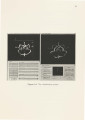
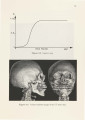
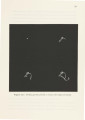
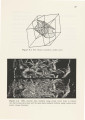
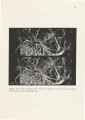
Show 22 Figure 3.10 shows the CT data rendered by planting a single seed and by letting that seed grow into a volume seedling. The left-hand side image uses a seed point to highlight a spherical region in the neck area. The right-hand side image shows a seedling grown from the same seed point using a gradient based seedling growth priority function. The right-hand side image uses a smaller opacity matte radius than left-hand side image to focus on the seedling rather than a broad area around the seedling. The volume seedling does a far better job of isolating the region of interest. Figure 3.11 shows the volume seedling growth process in the MRA data for a patient suffering from an aneurysm. The concept of matte volumes is discussed in detail to see how it fits in the framework of this research. 3.4 Matte Volumes A matte volume[4] is a function defined on a volume specifying a scalar value at each point in the volume. This value can be interpreted as the percentage of voxel contained by the matte or percentage of the material of interest contained by the matte. Matte volumes can be stored as an explicit array of values or by a procedural definition. Matte volumes may be defined by operators as the following: • spatially based These are operations like defining cut planes through data-sets and viewing the data on one side of the plane, defining arbitrarily shaped volumes through the data (cookie cutter), and planting of a seed in the data to enhance a spherical region around it. • value based These are approaches that are dependent on_ the data values in the volume. These approaches include various filtering operations, thresholding, data value dependent opacity mapping, etc. • hybrids |