| OCR Text |
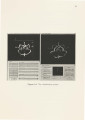
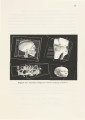
Show 4 1.2 System Overview The system consists of a Volume Renderer,1 a slice viewing program2 and an isosurface renderer, an implementation of the marching cubes algorithm[26] . A region growing algorithm coupled with the volume renderer[2) and matte volume heuristic reader (an interface between the matte volume generator and the volume renderer) is utilized by the volume renderer to make rendering and feature tracking decisions. Examples of matte volumes are volume seeds, volume seedlings, cookie cutter, and various other volumes generated through different techniques. The rest of the thesis describes these in more detail. Chapter 2 discusses the previous work done in the field of direct volume rendering, surface extraction, data manipulation and a few image processing techniques. Chapter 3 discusses the development of the test bed. It describes in detail the volume renderer, isosurface renderer and slice viewing program. This forms the base of the system on which different matte volume techniques are demonstrated. This chapter also describes the volume seeds and seedlings approach. It discusses how scientists, with these tools, can explore and visualize scientific data. It also gives an introduction to the concept of matte volumes. Chapter 4 discusses some of the ways of generating the matte volumes. Chapter 5 describes the result in terms of visualized images and also points to different avenues that can be explored. Conclusions are in this chapter. The driving applications for this research work have been the data-sets acquired for medical diagnostic use from various imaging modalities. 1developed jointly with K. Ma 2developed jointly with Elena Driskill |