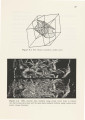
| OCR Text |
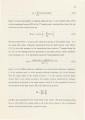
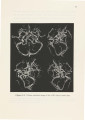
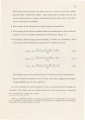
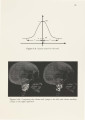
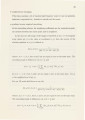
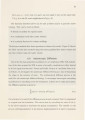
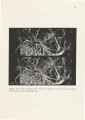
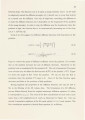
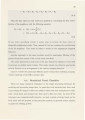
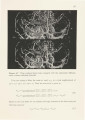
Show 31 for l, m, n = -1, 0, 1, but l, m and n are not equal to zero at the same time. V(i,j, k) is the 26 voxel neighborhood of p(i,j, k). The functions described above can be used as filters and/ or to generate matte volumes. They can be used as follows: • directly to modify the opacity matte. • in combination with other matte volumes. • as a priority function for volume seedlings. The data are rendered after these operations to observe the results. Figure 4.3 shows the MRA vascular data rendered using the inverse gradient filter matte volume and also that without using the matte volume. 4.3 Anisotropic Diffusion One of the the data acquisition modalities we are targeting is MRI. Full exploitation of the data acquired by MRI in terms of scientific visualization is often limited by its low signal-to-noise ratio. Perona and Malik, Gerig et al. and Saint-Marc et al. in Refs.[31, 12, 34] suggest the anisotropic diffusion filtering as a way of sharpening the edges in the presence of noise. The mathematical diffusion process is the model for the anisotropic diffusion filtering. It encourages intra-region smoothing in preference to smoothing across the boundaries. If there are no sinks and sources, the diffusion equation. is given by a . at u(x, t) = dtv( c(x, t) \7u(x, t)) (4.1) Our aim here is to control the diffusion process in such a manner that it is suppressed or stopped near the boundaries. This can be done by controlling the value of c(x, t). In the above equation x represents the spatial coordinate(s). The variable t is the process ordering parameter; in the discrete implementation it is used to enumerate |